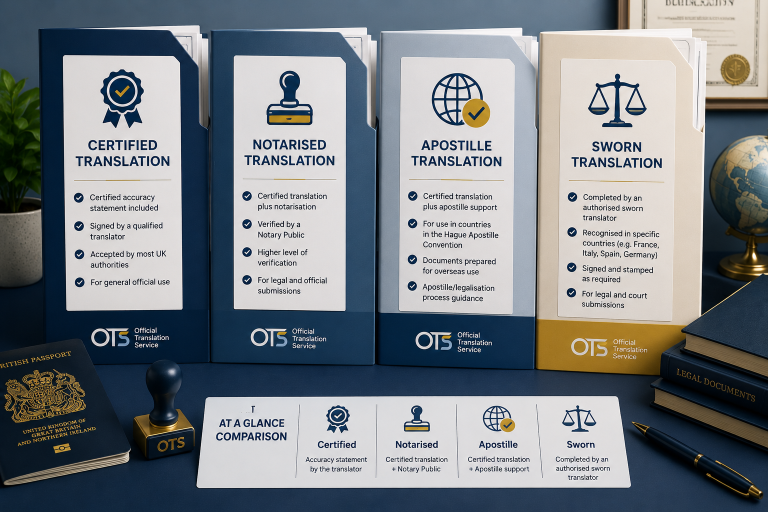
Understanding Slovenian Certified Translation
Slovenian certified translation refers to the translation of documents from Slovenian to English or vice versa, performed by a certified translator who is officially recognized by relevant authorities. This type of translation is crucial for various legal and official purposes, ensuring that the translated documents hold the same validity as the original texts. Certified translations are often required in situations involving immigration, legal proceedings, and academic applications, where accuracy and authenticity are paramount.
The importance of certified translation in legal contexts cannot be overstated. In the UK, many institutions, including courts, government agencies, and educational establishments, mandate certified translations for documents such as birth certificates, marriage certificates, legal contracts, and academic transcripts. A certified translation not only guarantees that the content is accurately rendered but also provides a signed statement of accuracy from the translator, which is essential for legal recognition. This certification process ensures that the translation meets the specific requirements set forth by various authorities, thus preventing potential issues that may arise from misinterpretation or inaccuracies.
What Does Slovenian Translation Mean in the UK?
Slovenian translation encompasses the conversion of text from Slovenian, a South Slavic language, into English or other languages and vice versa. The linguistic nuances of Slovenian, which include a rich array of dialects and regional variations, can pose challenges for translators. Understanding these subtleties is vital for producing a translation that is not only accurate but also culturally relevant.
In the UK, Slovenian translation is often required in several contexts. For instance, individuals seeking to study or work in the UK may need to have their academic qualifications translated and certified. This includes degree certificates and transcripts, which must accurately reflect the original content to meet the requirements of educational institutions and employers. Additionally, Slovenian translation is frequently necessary for immigration purposes, where applicants must submit various documents, including personal identification, marriage certificates, and legal documents, all of which need to be translated and certified to comply with UK regulations.
Moreover, businesses engaged in trade or partnership with Slovenian companies may require translation services for contracts, marketing materials, and technical documents. This ensures that both parties understand the terms and conditions, fostering effective communication and collaboration. The growing Slovenian community in the UK also contributes to the demand for translation services, as individuals seek assistance with personal documents, legal matters, and other essential services.
Requirements for Slovenian Certified Translation in the UK
To ensure the integrity and accuracy of Slovenian certified translations in the UK, specific requirements must be met. Firstly, the translator must be accredited, typically holding a qualification from a recognized professional body. This accreditation signifies that the translator possesses the necessary skills and knowledge to provide high-quality translations that adhere to industry standards.
In addition to the translator’s qualifications, the documentation required for certified translations is also critical. Generally, the following documents may need to be translated and certified:
- Birth certificates
- Marriage certificates
- Academic transcripts and diplomas
- Legal documents, such as contracts and court orders
- Immigration paperwork, including visas and residency applications
When submitting documents for translation, it is essential to provide clear and legible copies. The translator will then produce a certified translation, which includes a signed statement affirming the accuracy of the translation. This statement typically contains the translator’s name, qualifications, and contact information, along with a declaration that the translation is true and accurate to the best of their knowledge.
Furthermore, some institutions may have specific requirements regarding the format of the certified translation. It is advisable to check with the relevant authority or institution to ensure compliance with their guidelines, as this can vary significantly depending on the context.
The Process of Obtaining a Slovenian Certified Translation
The process of obtaining a Slovenian certified translation involves several key steps to ensure that the final product meets all necessary legal and institutional requirements. Here’s a detailed overview of the steps involved:
- Identify the documents: Determine which documents require translation. This could include personal identification, academic records, or legal documents.
- Choose a certified translator: Select a translator who is accredited and has experience in translating Slovenian documents. It’s important to verify their credentials and read reviews or testimonials to ensure quality.
- Submit the documents: Provide clear copies of the documents to the translator. If there are specific requirements from the receiving institution, communicate these to the translator.
- Translation process: The translator will convert the documents into the target language, ensuring that all details are accurately conveyed. This process may take several days, depending on the complexity and volume of the documents.
- Certification: Once the translation is complete, the translator will provide a signed statement of accuracy, certifying that the translation is true and correct.
- Delivery: The certified translation will be delivered to you, often in both digital and hard copy formats, depending on your needs.
The timeline for obtaining a Slovenian certified translation can vary. Typically, it can take anywhere from a few days to a couple of weeks, depending on the translator’s workload and the complexity of the documents. Costs associated with certified translation also vary, influenced by factors such as the length of the document, the urgency of the request, and the specific requirements of the translation service.
Common Uses of Slovenian Certified Translation
Slovenian certified translation is essential in various scenarios, particularly in legal and administrative contexts. Here are some common uses:
- Legal documents: Translations of contracts, court documents, and other legal papers are often required for legal proceedings, ensuring that all parties understand the terms and conditions.
- Academic transcripts: Students applying to universities or colleges in the UK must provide certified translations of their academic records to verify their qualifications.
- Immigration paperwork: Individuals applying for visas or residency must submit certified translations of personal documents, such as birth and marriage certificates, to comply with immigration regulations.
In addition to these common uses, businesses may require certified translations for marketing materials, technical documents, and product descriptions when entering the Slovenian market or engaging with Slovenian clients. Accurate translations in these contexts are vital for maintaining professionalism and ensuring clear communication.
Choosing the Right Translation Service for Slovenian Certified Translation
Selecting the right translation service for Slovenian certified translation is crucial to ensure high-quality results. Here are several factors to consider when making your choice:
- Accreditations: Ensure that the translation service employs accredited translators with relevant qualifications. Look for membership in professional organizations, such as the Institute of Translation and Interpreting (ITI) or the Association of Translation Companies (ATC).
- Experience: Choose a service with a proven track record in translating Slovenian documents. Experience in specific fields, such as legal or academic translation, can also be advantageous.
- Client reviews and testimonials: Research feedback from previous clients to gauge the quality of service and customer satisfaction. Positive reviews can provide insight into the reliability and professionalism of the translation service.
- Turnaround times: Inquire about the expected timeline for completing translations. If you have a tight deadline, ensure that the service can accommodate your needs.
- Cost transparency: Request a detailed quote that outlines the costs associated with the translation service. Be wary of hidden fees and ensure that the pricing aligns with industry standards.
By considering these factors, you can select a translation service that meets your needs and delivers accurate, certified translations of your Slovenian documents.
Challenges in Slovenian Certified Translation
One of the primary challenges is the linguistic complexity of Slovenian. The language features various dialects and regional variations, which can lead to misunderstandings if not accurately interpreted. Therefore, it is crucial to work with a translator who is not only fluent in Slovenian but also familiar with its cultural nuances.
Another challenge is the potential for misinterpretation of legal terminology. Legal documents often contain specific terms that may not have direct equivalents in English or may be interpreted differently in different legal systems. A certified translator with expertise in legal translation can help mitigate this risk by ensuring that all terminology is accurately conveyed.
Finally, the context in which the translation will be used is vital for accuracy. Providing the translator with sufficient context about the purpose of the document can significantly enhance the quality of the translation. This includes details about the intended audience and any specific requirements from the receiving institution.
Frequently Asked Questions
What is Slovenian certified translation?
It is a translation that is officially recognized and accepted for legal purposes.
What are the requirements for Slovenian certified translation in the UK?
Translators must be accredited and provide a signed statement of accuracy.
How long does it take to get a Slovenian certified translation?
Typically, it can take anywhere from a few days to a couple of weeks depending on the document.
What types of documents require Slovenian certified translation?
Legal documents, academic records, and immigration papers are commonly required.
How do I choose a reliable translation service for Slovenian certified translation?
Look for reviews, accreditations, and experience in handling Slovenian documents.