Medical Reports
Specialist reports, diagnosis records, treatment plans, scan reports, laboratory reports and clinical findings.

Clear, carefully prepared medical translations for patients, healthcare providers, clinics, hospitals, insurers, solicitors and organisations working with healthcare documents.
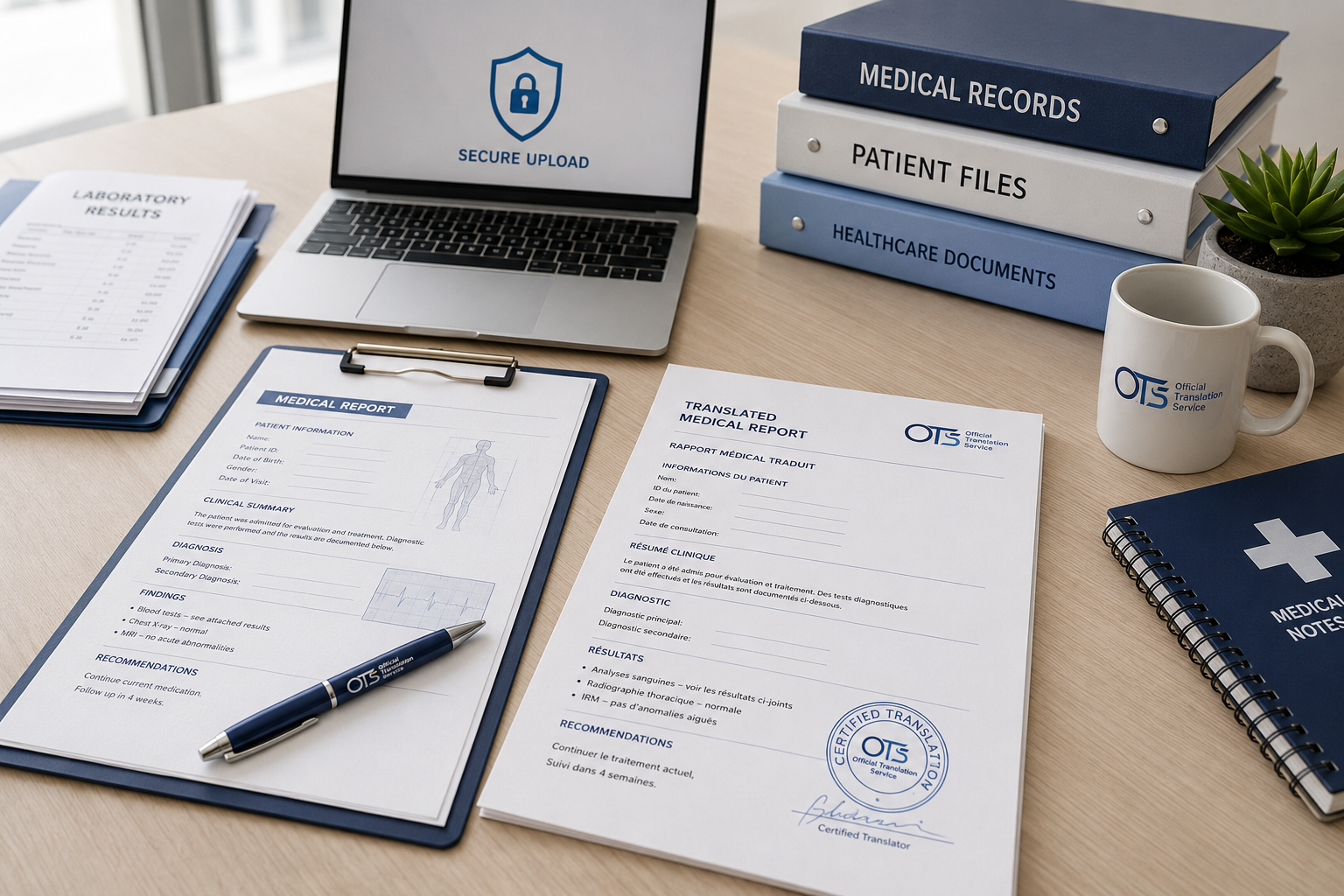
Medical information appears in many formats. We can review individual documents as well as larger sets of records, taking account of the source files and how the translation will be used.
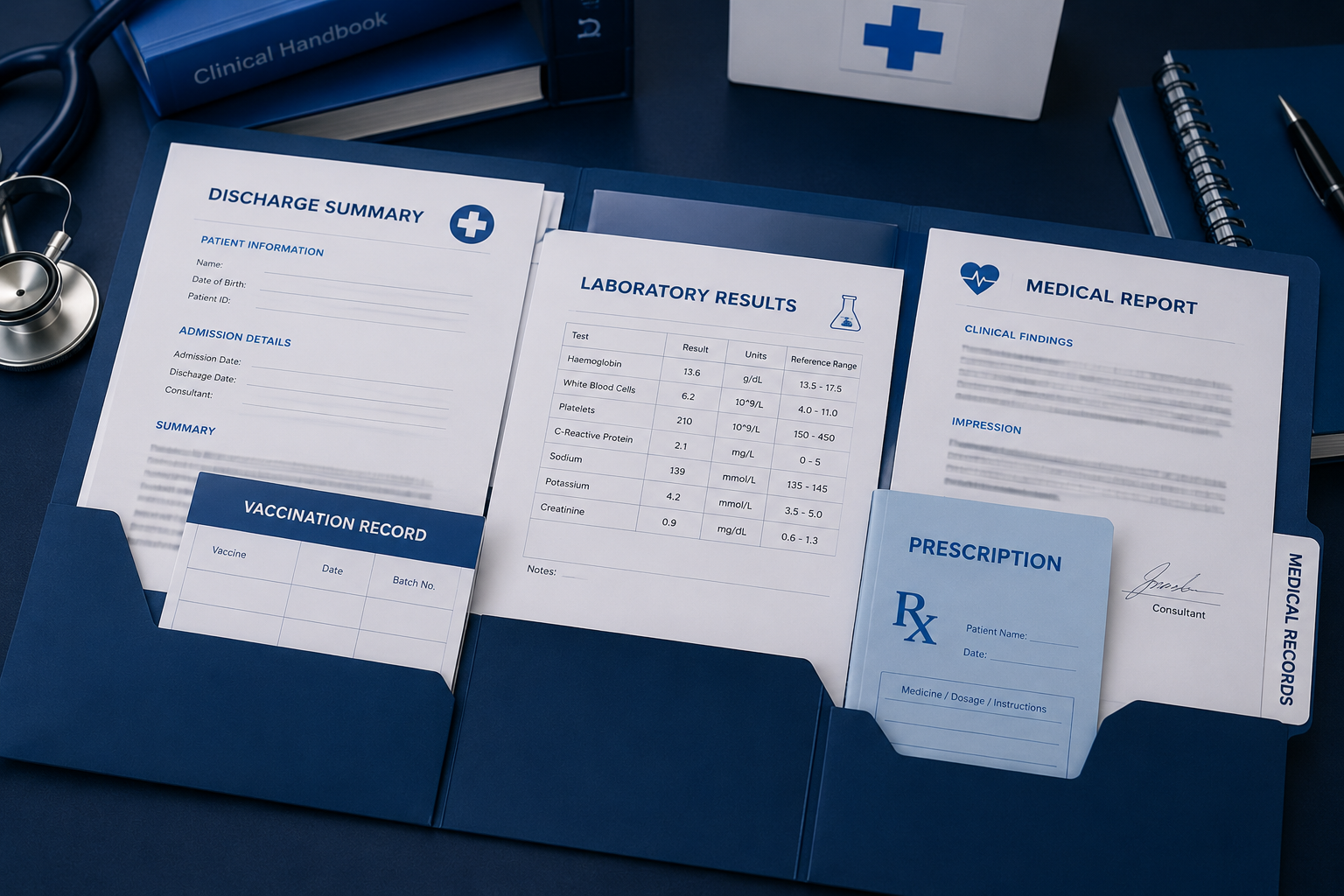
Specialist reports, diagnosis records, treatment plans, scan reports, laboratory reports and clinical findings.
Patient histories, consultation notes, clinical records, referrals and supporting healthcare files.
Hospital correspondence, GP letters, specialist letters, appointment information and clinical communications.
Discharge documents, treatment summaries, follow-up instructions and related care information.
Prescriptions, medication lists, dosage information and medicine-related documents.
Blood tests, laboratory findings, diagnostic results, scan findings and structured clinical tables.
Vaccination certificates, immunisation histories and supporting health records for personal or official use.
Medical insurance correspondence, claim forms, rehabilitation reports and supporting evidence.
Workplace health assessments, fitness information, occupational reports and related documents.
A standard professional translation may be suitable for personal understanding or communication. Formal certification may be required when medical documents are being submitted to an authority, insurer, solicitor, embassy, government department or another organisation that requests it.
Where required, the completed translation can include a certification statement, stamp, signature and date. Always check the exact requirements with the organisation receiving the document.
The intended reader and purpose affect terminology, presentation and the level of certification that may be required.
For understanding treatment information, maintaining records or sharing documents with another healthcare provider.
For clinical correspondence, patient information, referrals and healthcare administration.
For medical reports, test findings, treatment histories and supporting documents received in another language.
For claims, medical evidence, rehabilitation information, assessments and supporting healthcare records.
For medical evidence connected with legal proceedings, personal injury, immigration or insurance matters.
For occupational health records, healthcare correspondence and other medical documentation used operationally.
The source files, language pair, intended use, required format and deadline are reviewed before the translation proceeds.
Upload a clear scan, PDF or photograph of the complete document and identify the required language.
Explain the intended use and whether certification, specific formatting or a hard copy is required.
The content is translated with attention to terminology, names, dates, measurements, completeness and layout.
Your completed translation is delivered in the agreed format, with certification or a printed copy where arranged.
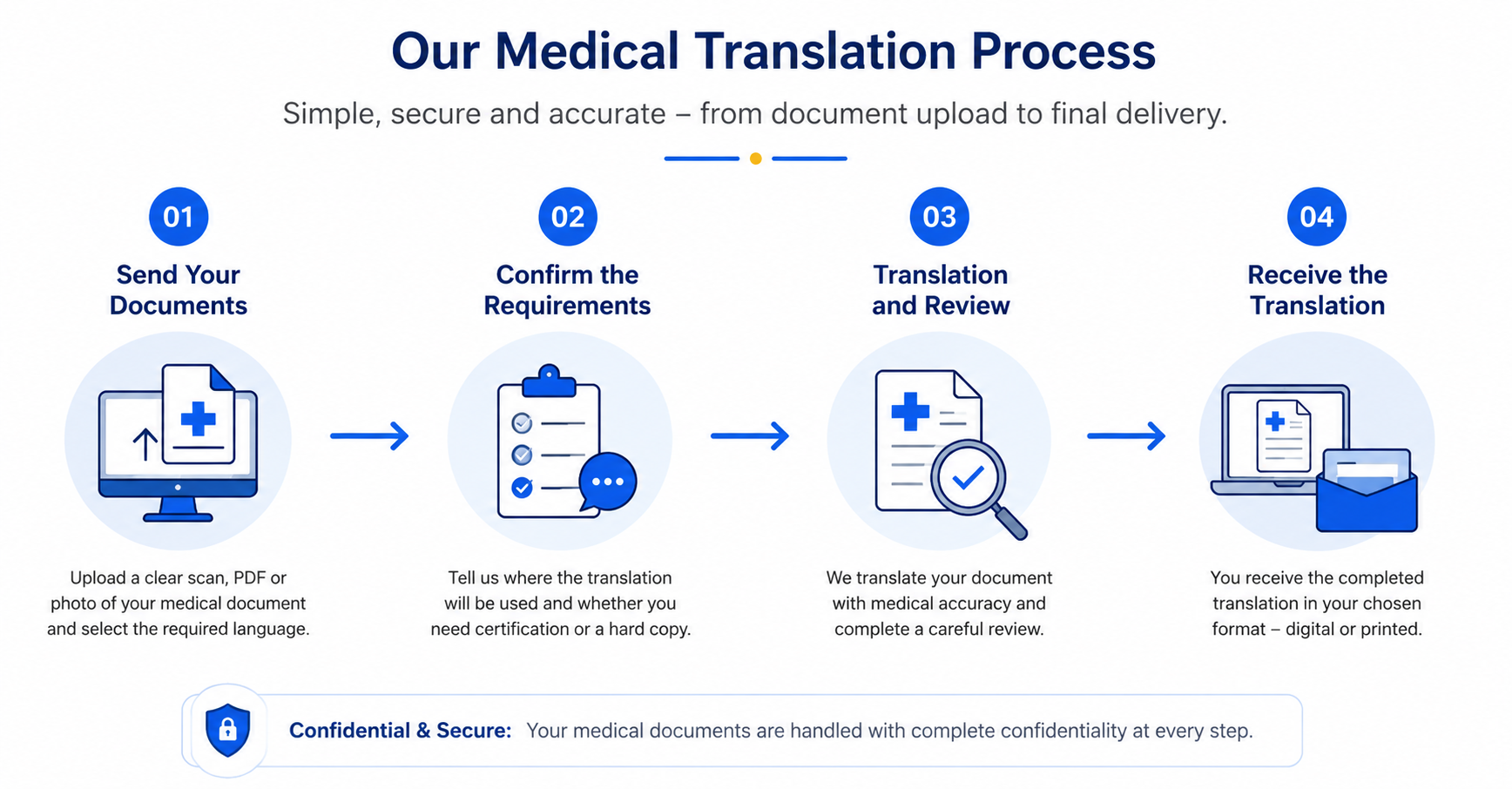
Clear files and complete instructions reduce unnecessary questions and help preserve the correct medical context.
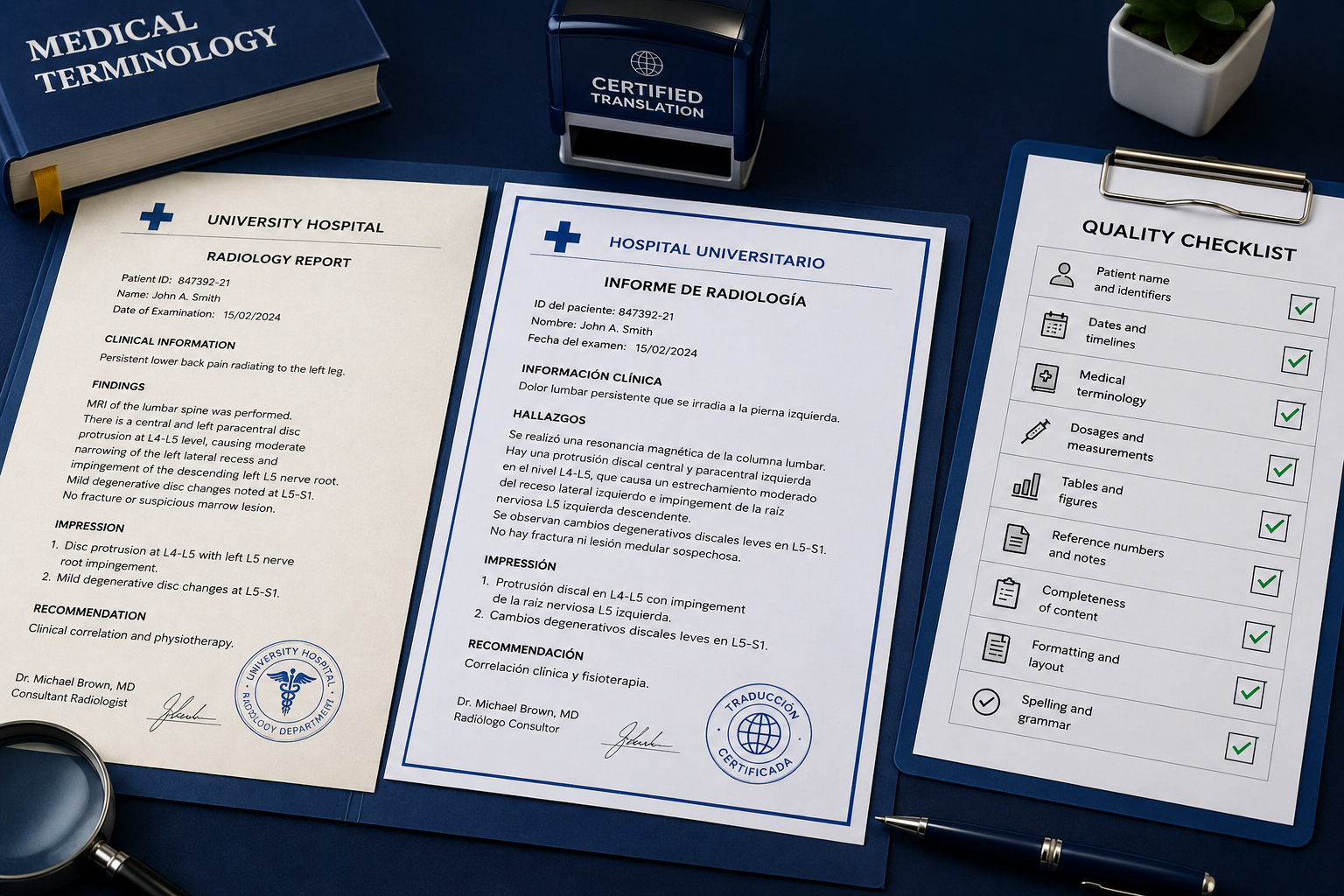
Medical documents can contain abbreviations, measurements, medicine names, reference ranges, dates and structured clinical information. These details need to remain consistent and clear in the translated document.
Medical translation turnaround depends on the amount of text, language pair, subject complexity, source quality, formatting and whether certification is required.
Short medical documents may be completed within two to three working days. Larger patient records, complex reports or multi-document files may require additional time. Your documents should be reviewed before the final price and delivery time are confirmed.
Completed translations can be supplied digitally in the agreed format. A certified translation or printed hard copy can also be arranged where required.
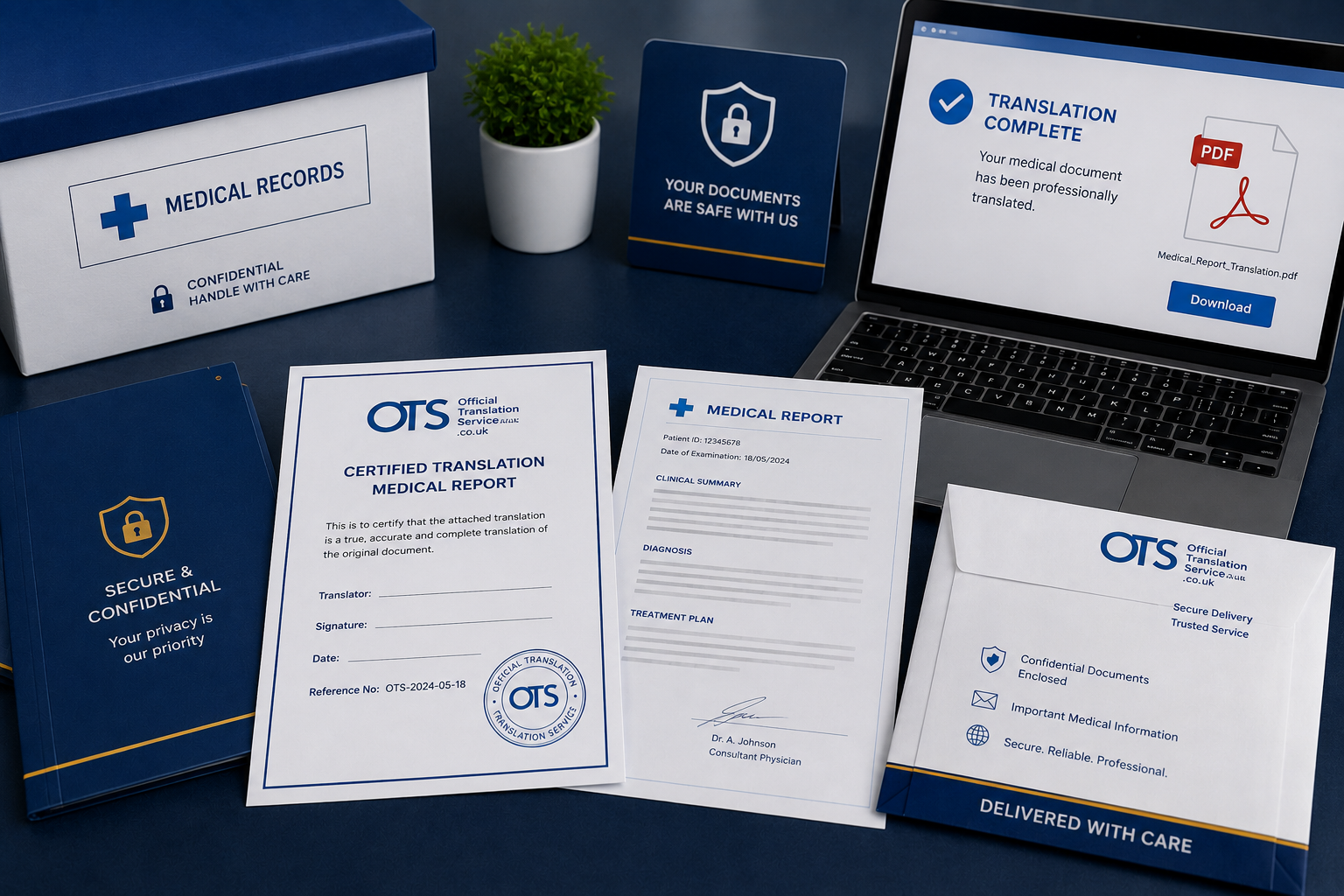
A few checks at the beginning can prevent missing information, unsuitable certification and avoidable delays.
Medical context may continue across several pages. Missing pages can affect terminology, chronology and completeness.
Unclear figures, medicine names, handwritten notes or dates may require clarification before work can be completed.
A translation for personal reference may have different requirements from one submitted to an insurer, solicitor or authority.
Ask the receiving organisation which format it requires rather than ordering an unnecessary or unsuitable service.
Long patient files and complex reports require time for translation, terminology review, formatting and final checking.
Send the original document as clearly as possible so headings, tables, references, stamps and notes can be reviewed accurately.
Answers to common questions about medical records, certification, formatting, turnaround and confidential handling.
Documents can include medical reports, clinical letters, prescriptions, patient records, discharge summaries, test results, vaccination records, referral letters, insurance documents, occupational health records and supporting medical evidence.
Yes. Where required, a medical translation can be supplied with a certification statement, stamp, signature and date. Tell us which organisation will receive the document so its requirements can be reviewed before the order proceeds.
Yes. This can include specialist reports, laboratory results, blood test results, scan reports, diagnosis records, treatment plans and clinical findings. Clear source files are particularly important where documents contain small figures or complex tables.
Turnaround depends on document length, language pair, complexity, formatting and certification requirements. Short documents may be completed within two to three working days, while extensive medical records or complex files may take longer.
The translation is prepared with attention to diagnoses, treatments, procedures, medicine information, anatomy, measurements and clinical abbreviations. Terminology is reviewed alongside the source document for consistency.
Yes. Medical documents are handled confidentially and with care because healthcare records can contain sensitive personal, medical, legal and insurance-related information.
Where practical, the translated document can follow the original structure, including headings, tables, test-result layouts, signatures, stamps, reference numbers and official notes. Source quality and document format can affect how closely the layout is reproduced.
Large files can be reviewed before work begins so the page count, document types, formatting, deadline and intended use can be assessed. Send the complete record set and identify any pages requiring priority handling.
Send clear copies of every page, state the source and target languages, explain where the translation will be used, confirm whether certification is required and provide your preferred deadline and delivery format.
The completed translation can be delivered by email in the agreed format. A printed hard copy can also be arranged where required, so mention this when the order details are confirmed.
Upload the complete document, identify the language you need and explain where the translation will be used. The team can then confirm the appropriate service, price and expected turnaround.