Understanding Academic Transcript Translation
Academic transcript translation refers to the process of converting a student’s academic records from one language to another. This is a critical service for individuals who have completed their education in a non-English speaking country and wish to further their studies or seek employment in the UK. An academic transcript typically includes details such as the courses taken, grades received, and degrees awarded, all of which must be accurately conveyed in the target language to ensure that the recipient institution can assess the qualifications appropriately.
The importance of accurate translations for academic purposes cannot be overstated. Institutions in the UK, such as universities and colleges, often require official translations of transcripts to ensure that they fully understand the applicant’s educational background. Mistranslations can lead to misunderstandings regarding a student’s qualifications, potentially resulting in admission denials or misplacement in academic programs. For example, if a transcript inaccurately translates a grade or misrepresents a course’s content, it could significantly impact a student’s academic journey.
Academic transcript translations may also be used for professional registration, employment and qualification assessment. Whether certification is required depends on the university, employer, regulator or other organisation receiving the record, so check its current instructions before ordering.
Quick Answer: What Is an Academic Transcript Translation?

An academic transcript translation is the translation of a student’s official record of study from one language into another. It usually includes subjects, modules, grades, marks, credits, attendance details, academic years, institution names, stamps, seals and any notes issued by the school, college or university.
If the transcript will be used for a UK university, employer, professional body, immigration application or qualification assessment, a certified translation is often required. This means the translated document is supplied with a signed statement confirming that it is a true and accurate translation of the original.
For best results, the translation should keep the original structure of the transcript as closely as possible, including tables, grade columns, dates, signatures and official remarks. This helps the receiving organisation compare the translation with the original document quickly and clearly.
Academic and School Transcript Translation Services
Transcript translation is not only for university records. Many people also need school transcript translation services for secondary school records, college mark sheets, diploma supplements, vocational course records, exchange programme documents and incomplete study records.
A professional transcript translation service can help with documents such as:
- School transcripts and report cards
- University academic transcripts
- College mark sheets
- Diploma supplements
- Course records and module lists
- Grade reports and examination records
- Vocational training records
- Academic records for transfer applications
- Supporting education documents for UK ENIC, universities or employers
Each document should be translated carefully so that names, dates, grades, subjects, credits and institution details match the original record. Where the original includes stamps, handwritten notes, seals or signatures, these should be reflected clearly in the translation.
When You May Need a Certified Transcript Translation

You may need a certified transcript translation if your academic record is not in English and you need to submit it for official use in the UK or overseas.
Common reasons include:
- Applying to a UK university, college or school
- Applying for postgraduate study
- Submitting international qualifications for assessment
- Providing education records to an employer
- Applying for professional registration or licensing
- Supporting a visa, immigration or relocation application
- Transferring from one school or university to another
- Applying for scholarships or funded study programmes
Before ordering, check the exact instructions from the organisation receiving the document. Some institutions only need a certified digital copy, while others may request a hard copy, notarised translation or additional verification.
What to Send for Transcript Translation

To prepare an accurate transcript translation, send a clear scan, PDF or photo of the full document. Make sure every page is visible, including stamps, seals, signatures, footnotes, grading keys and reverse-side notes if they appear on the original.
It is helpful to provide:
- A clear copy of the transcript or mark sheet
- Any accompanying degree certificate, diploma or award letter
- The exact spelling of your name as shown on your passport or application
- The name of the organisation receiving the translation
- Any formatting or certification instructions from that organisation
- Your deadline, if the translation is needed for an application date
If the transcript uses abbreviations, local grading terminology or handwritten notes, it is better to send the full document rather than cropping it. Missing details can delay the translation or require follow-up questions.
What a Certified Transcript Translation Should Include
A certified transcript translation should be complete, clear and suitable for official review. It should usually include the translated transcript, the translator or agency certification statement, the date of translation, and the relevant contact or company details.
The translation should normally preserve:
- Student name and identification details
- Institution name and department
- Academic year or study period
- Subjects, modules or courses
- Marks, grades, credits and classifications
- Official stamps, seals and signatures
- Notes, remarks, legends or grading explanations
- Page numbers and document structure
The purpose is not to redesign the transcript, but to make the original information understandable in the target language while keeping the record easy to compare with the source document.
Why You Need a Transcript Translation in the UK
There are several scenarios in which a transcript translation is necessary for individuals in the UK. The most common include:
- University Admissions: Many UK universities require international students to submit translated transcripts as part of their application process. This ensures that admissions committees can accurately evaluate the applicant’s previous academic performance.
- Employment Opportunities: Employers often request translated academic transcripts to verify candidates’ qualifications. This is particularly true for positions that require specific educational backgrounds.
- Professional Licensing: Certain professions in the UK, such as healthcare and engineering, require individuals to present certified translations of their academic credentials to obtain licenses or certifications.
- Visa Applications: When applying for a student or work visa, applicants may need to provide translated academic transcripts to demonstrate their educational qualifications.
An inaccurate transcript translation can create questions about grades, modules, credits, dates or qualification details and may require clarification or correction. The receiving organisation decides the effect of any discrepancy, so the practical priority is a complete translation that preserves the source record accurately.
To avoid these issues, it is crucial to engage a professional translation service that specializes in academic documents. This ensures that the translation adheres to the required standards and accurately reflects the original content.
Requirements for Academic Transcript Translation in the UK
Academic transcript requirements vary between universities, schools, employers, regulators and assessment bodies. Before ordering, check the exact instructions supplied by the organisation receiving the translation.
- Original Documents: You must provide the original academic transcript in its native language. This document serves as the basis for the translation.
- Certification requirements: If the receiving organisation asks for a certified translation, include the accuracy statement and provider details it specifies.
- Specific Formatting: Some institutions may have specific formatting requirements for translated documents. This can include the layout, font, and inclusion of official stamps or seals. It is essential to check with the receiving institution to ensure compliance with their guidelines.
- Language Proficiency: The translator must be proficient in both the source and target languages, with a strong understanding of academic terminology. This ensures that the translation is not only accurate but also contextually appropriate.
In addition to these requirements, it is advisable to inquire about the turnaround time for the translation, as this can vary depending on the service provider. Some institutions may require expedited services, especially when application deadlines are approaching.
The Process of Getting Your Academic Transcript Translated

Obtaining a translation of your academic transcript involves several key steps:
- Research Translation Services: Start by researching certified translation services that specialize in academic documents. Look for providers with positive reviews and relevant experience in translating transcripts.
- Request a Quote: Contact the translation service to request a quote. Be prepared to provide details about the document, including the length, language pair, and any specific requirements.
- Submit Your Documents: Once you agree on the terms, submit your original academic transcript and any additional documents required for the translation.
- Translation Process: The translation service will assign a qualified translator to your project. They will translate the document while ensuring that all academic terminology is accurately conveyed.
- Certification: After the translation is complete, the service will provide a certified translation, which includes a declaration of accuracy. This document is essential for submission to educational institutions or employers.
- Review and Approval: Review the translated document to ensure that all information is accurately reflected. If you have any concerns, discuss them with the translation service.
- Receive Your Translated Transcript: Once approved, you will receive the final certified translation, which you can then submit to the relevant institutions or employers.
Choosing a certified translator is crucial in this process. A professional translator should not only be fluent in both languages but also possess expertise in academic terminology and practices. This ensures that the translation is not only accurate but also contextually appropriate for the intended audience.
How Grades and Academic Terms Are Handled
Grades and academic terms must be translated carefully because education systems differ between countries. A translator should not casually convert grades into UK equivalents unless the receiving organisation specifically asks for that kind of evaluation.
In most cases, the safest approach is to translate the grade labels, preserve the original marks or scores, and include any grading scale notes shown on the transcript. For example, if the original transcript includes a pass mark, maximum score, credit system or grade legend, that information should be included in the translation.
This avoids confusion and allows universities, employers or assessment bodies to interpret the academic record according to their own rules.
Cost Factors for Academic Transcript Translation
The cost of academic transcript translation can vary significantly based on several factors:
- Length of the Document: Longer transcripts will generally cost more to translate due to the increased time and effort required.
- Language Pair: The complexity of the languages involved can affect pricing. For example, translations between widely spoken languages may be less expensive than those involving less common languages.
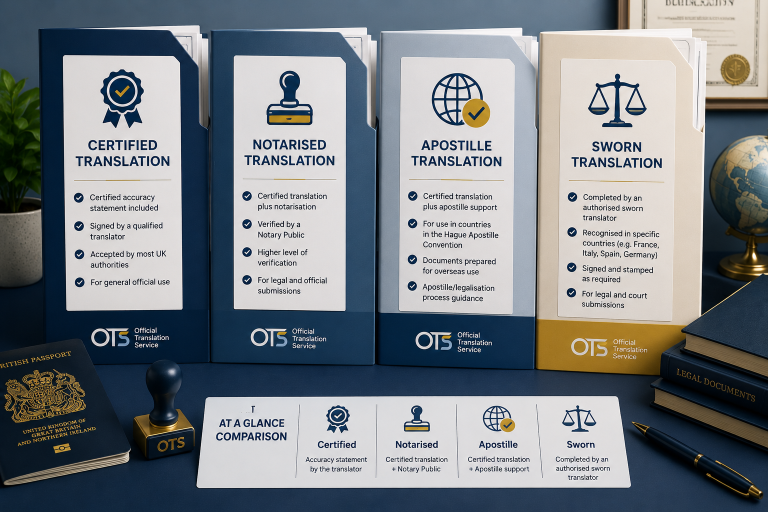
- Certification Requirements: If a certified translation is required, this may incur additional fees. Certification involves extra steps to ensure the accuracy and authenticity of the translation.
- Turnaround Time: If you need your transcript translated urgently, many services offer expedited options for an additional fee.
Pricing depends on the transcript length, language pair, tables, grading notes, legibility and certification requirements. Check the published translation pricing or send the transcript for review rather than relying on a generic market range.
Common Challenges in Academic Transcript Translation
Translating academic transcripts presents several challenges that can affect the quality of the final product:
- Language-Specific Challenges: Different languages have unique structures and idiomatic expressions that may not have direct equivalents in English. This can lead to difficulties in accurately conveying the intended meaning.
- Cultural Nuances: Academic terminology can vary significantly across cultures. For example, the grading systems in different countries may not align with those in the UK, making it essential for the translator to provide context and clarification in the translation.
- Subject-Specific Terminology: Different academic disciplines may use specialized language that requires a translator to have a deep understanding of the subject matter to ensure accuracy.
- Formatting Issues: Maintaining the original formatting of the transcript while ensuring that the translated text fits appropriately can be challenging. This includes aligning text, maintaining tables, and ensuring that all information is presented clearly.
To mitigate these challenges, it is crucial to work with a translation service that has experience in academic translations and a strong understanding of the specific requirements of the institutions involved.
Practical Checklist Before You Submit Your Transcript

Before sending your translated transcript to a university, employer or official body, check that:
- Your name matches your application documents
- All pages of the original transcript have been translated
- Grades, subjects, dates and institution names are complete
- Stamps, seals and signatures are represented
- The translation includes a certification statement
- The translation date and provider details are included
- Any special instructions from the receiving organisation have been followed
- You have both the translated document and the original available if requested
If you are unsure whether you need a certified, notarised or hard-copy translation, ask the receiving organisation before submitting. This can help avoid delays close to an application deadline.
Tips for Selecting a Translation Service
Choosing the right translation service is vital for ensuring that your academic transcript is accurately translated. Here are some tips to guide your selection:
- Check Credentials: Look for translation services that are certified and have qualified translators with relevant experience in academic translations.
- Read Reviews: Research customer reviews and testimonials to gauge the quality of service provided by the translation agency.
- Inquire About Specialization: Ensure that the service specializes in academic translations, as this will ensure familiarity with the specific terminology and formatting requirements.
- Ask About Turnaround Times: Confirm the expected turnaround time for your translation, especially if you are working with tight deadlines.
- Request a Sample: If possible, request a sample of previous translations to assess the quality of their work.
By following these tips, you can ensure that you select a translation service that meets your needs and provides a high-quality translation of your academic transcript.
Need Help Translating an Academic or School Transcript?
If you need an academic transcript, school transcript, mark sheet or course record translated for UK use, see our academic transcript translation service. Send a clear copy and tell us where it will be submitted so the suitable translation and certification format can be confirmed.
A careful certified translation can help universities, employers and official bodies review your academic record more easily and reduce the risk of avoidable document issues.
Frequently Asked Questions
What is an academic transcript?
An academic transcript is a document detailing a student’s academic performance and courses taken.
How do I get my academic transcript translated?
To get your academic transcript translated, contact a certified translation service and provide your transcript.
What are the requirements for transcript translation in the UK?
Requirements depend on the receiving institution. It may request certification, particular formatting, the source document, or additional verification, so check its current instructions before submission.
How long does the transcript translation process take?
Turnaround depends on the number of pages, language pair, formatting complexity, legibility and certification requirements. Send the complete transcript and deadline for a confirmed timeframe.
Is a certified translation necessary for university applications?
Many universities request certified or official translations, but requirements differ. Check the admissions instructions for the specific institution and course before ordering.
Do school transcripts need certified translation?
School transcripts often need certified translation if they are being submitted to a UK school, college, university, employer, professional body or official authority and the original document is not in English. Always check the receiving organisation’s instructions before submission.
Can you translate university transcripts and school mark sheets?
Yes. Academic transcript translation can cover university transcripts, school records, college mark sheets, examination results, diploma supplements, course lists and grade reports. The translation should preserve the original academic information clearly and accurately.
Should grades be converted into UK equivalents?
Usually, grades should not be converted unless the receiving organisation specifically asks for an evaluation. A certified transcript translation normally translates the wording and preserves the original grades, marks, credits and grading notes shown on the document.
What if my transcript has stamps, seals or handwritten notes?
Stamps, seals, signatures and handwritten notes should be reflected in the translation where they are visible and relevant. If any part of the document is unclear, the translation may need to mark it as unclear rather than guessing.
Do I need to send the original transcript?
In most cases, a clear scan, PDF or photo is enough to prepare a quote and begin the translation. However, some receiving organisations may ask you to submit the original document alongside the certified translation.
How long does academic transcript translation take?
Turnaround time depends on the language pair, number of pages, formatting complexity and certification requirements. Simple transcripts may be completed more quickly, while longer records, handwritten notes or urgent deadlines may require a custom timeline.
Can I use the same transcript translation for more than one application?
Often, yes, if the translation is accurate, complete and accepted by each receiving organisation. However, some institutions have their own formatting, date, hard-copy or certification requirements, so it is worth checking before reusing the same translation.
Ready to translate an academic transcript?
Review the transcript translation service and academic translation services, or send the complete record online.