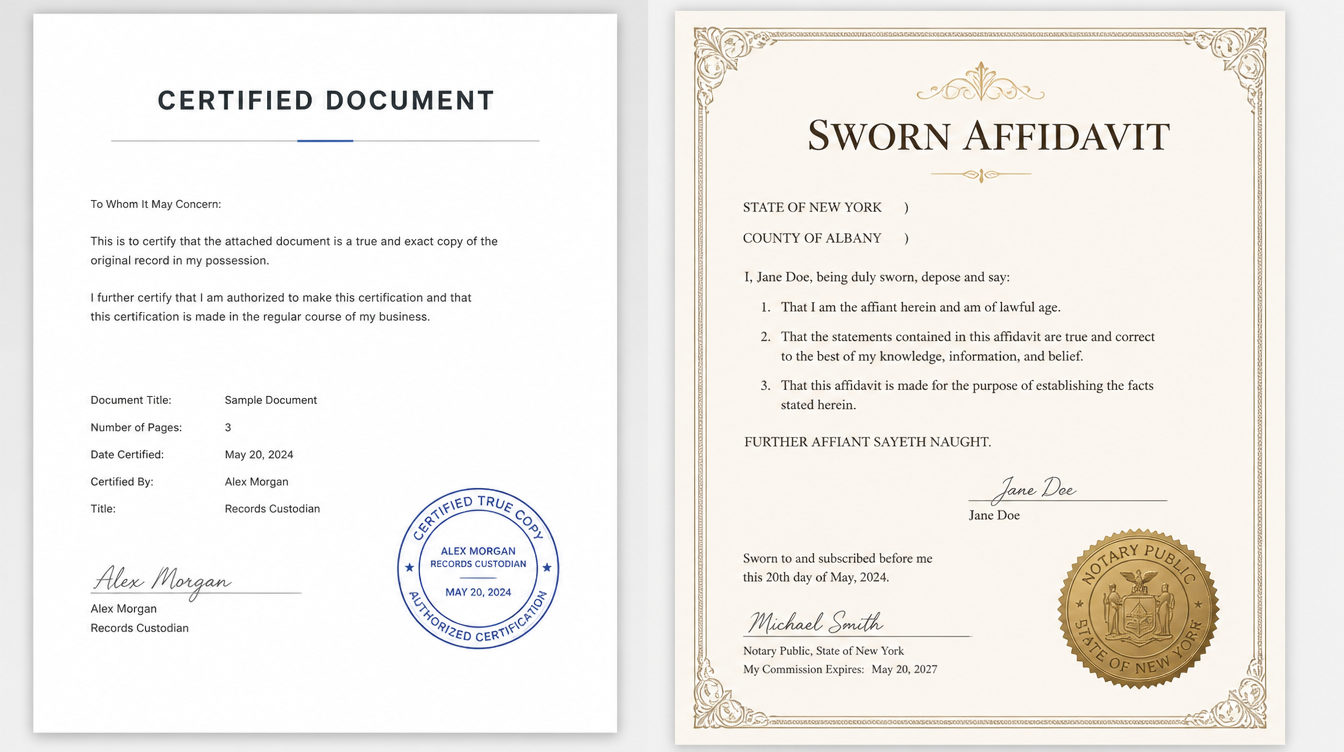
Understanding Certified Translation
A certified translation is supplied with a signed statement confirming responsibility for the translation’s accuracy and completeness. Certification can be required for legal, immigration, academic or other official uses, but it does not automatically give the translated document the same legal status or authenticity as the source.
In the UK, certified translations may be requested for birth certificates, marriage certificates, academic records, contracts and other documents. For immigration use, translate the evidence required by the specific route and follow that route’s current instructions rather than assuming every non-English document needs the same certification format.
Another scenario where certified translation is essential is in legal proceedings. Courts may require certified translations of documents to ensure that all parties understand the content, especially in cases involving international elements or non-English speaking individuals. The accuracy and reliability of certified translations are paramount, as any discrepancies can lead to misunderstandings or legal complications.
To obtain a certified translation, use a provider with the relevant language and document expertise and give them the recipient’s current requirements. Professional-body membership can be a useful quality signal, but it is not universally mandatory. The certification details should match what the receiving organisation asks for.
What is Sworn Translation?
Sworn translation, on the other hand, is a specific type of translation that holds legal significance in certain jurisdictions. In the UK, sworn translation is not as commonly recognized as in other countries, such as France or Germany, where sworn translators are officially appointed by the government. However, the term is often used interchangeably with certified translation, leading to some confusion.
In jurisdictions that operate a sworn-translator system, a sworn translator is formally authorised under that country’s rules to produce translations for specified official uses. The effect and acceptance of a sworn translation depend on the jurisdiction and recipient; it should not be described as universally “legally binding”. The UK does not operate one nationwide sworn-translator appointment system.
The legal implications of sworn translation in the UK can be nuanced. For example, a sworn translation may be required for certain legal documents, such as contracts, court documents, or documents intended for use in foreign jurisdictions that require a sworn translator. However, it is essential to check the specific requirements of the institution or authority requesting the translation, as they may accept certified translations instead.
Overall, while sworn translation carries a specific legal weight in some countries, in the UK, the term is often used more loosely, and certified translation remains the primary standard for official translations. Understanding the nuances between these two types of translation is crucial for individuals and organizations navigating legal and immigration processes.
Key Differences Between Certified and Sworn Translation
The distinction between certified and sworn translation lies primarily in their definitions, legal implications, and the contexts in which they are required. Here are some key differences:
- Certification Process: Certified translation involves a translator or agency providing a signed statement of accuracy. This certification does not require any formal government appointment. In contrast, sworn translation typically requires the translator to be officially appointed or recognized by a legal authority in jurisdictions where this practice is established.
- Recognition: In the UK, recipients commonly ask for certified translations, while a foreign authority may specifically require a sworn translator under its own national system. The receiving organisation decides the acceptable route.
- Use cases: Certified translations may be requested for academic, legal, immigration and other official documents in the UK. Sworn translation is relevant when the destination country or receiving authority specifically requires a sworn translator.
- Translator Qualifications: Certified translators may possess various qualifications and memberships in professional organizations, but they are not required to be sworn in by a government body. Sworn translators, where applicable, must meet specific legal criteria and often undergo a formal appointment process.
Understanding these differences is crucial for individuals and organizations seeking translations for official purposes. Choosing the right type of translation can significantly impact the acceptance of documents by authorities and institutions.
Does the UK Have Sworn Translators?
The concept of sworn translators in the UK is somewhat ambiguous. Unlike countries such as France or Spain, where sworn translators are officially appointed and recognized by the government, the UK does not have a formal system for sworn translators. Instead, the term is often used informally to describe translators who claim to have special qualifications or experience in legal translation.
The UK does not have a single nationwide system equivalent to countries that formally appoint sworn translators. UK-based providers can still prepare certified translations, while documents intended for another country may need a sworn translator appointed under that country’s rules.
To find a qualified translator for sworn or certified translations, individuals can:
- Search for translation agencies that specialize in legal and certified translations.
- Look for freelance translators who are members of recognized professional bodies, such as the Institute of Translation and Interpreting (ITI) or the Chartered Institute of Linguists (CIOL).
- Check reviews and testimonials to ensure the translator has a proven track record in delivering high-quality translations.
It is essential to communicate the specific requirements of the translation to the translator or agency, as this will help ensure that the final product meets the necessary legal standards. In some cases, institutions may accept a certified translation instead of a sworn translation, so it is advisable to clarify the requirements beforehand.
When to Choose Certified Translation Over Sworn Translation
Choosing between certified and sworn translation depends on the specific needs of the individual or organization and the requirements of the institution requesting the documents. Here are some scenarios where certified translation may be the more appropriate choice:
- Immigration applications: Follow the current translation instructions for the specific UK immigration route and evidence being submitted. Do not assume every route requires the same documents or certification wording.
- Legal proceedings: A UK court or solicitor may specify the form of translation required for a particular matter. A foreign court may instead require a sworn translation under its national rules.
- Academic Purposes: Universities and educational institutions often require certified translations of academic transcripts and diplomas. These translations must accurately reflect the original documents to ensure proper evaluation of qualifications.
Common misconceptions about sworn translation include the belief that it is universally required for all legal documents. In reality, while some jurisdictions may require sworn translations, the UK does not have a formal system for sworn translators, and certified translations are widely accepted.
Additionally, individuals may mistakenly think that sworn translations are inherently more accurate or reliable than certified translations. The accuracy of a translation depends on the translator’s qualifications and expertise, not necessarily their sworn status. Therefore, it is crucial to choose a qualified translator or agency, regardless of whether the translation is certified or sworn.
The Importance of Accuracy in Translation
Accuracy in translation is paramount, especially when dealing with official documents that can significantly impact an individual’s legal status, educational opportunities, or professional credentials. Inaccurate translations can lead to serious consequences, including:
- Legal Issues: Misinterpretations of legal documents can result in disputes, contractual breaches, or even legal penalties. For instance, a poorly translated contract may lead to misunderstandings about obligations and rights.
- Immigration complications: Inaccurate translated evidence can create questions, requests for further evidence or delays. The consequences depend on the application and the significance of the error.
- Academic Setbacks: For students, inaccurate translations of academic transcripts or diplomas can hinder admission to educational institutions or affect scholarship opportunities. Institutions require precise translations to evaluate qualifications accurately.
To ensure quality in certified and sworn translations, individuals and organizations should consider the following steps:
- Choose a suitable provider: Prioritise language competence, subject-matter experience and the ability to meet the receiving organisation’s required certification route. Professional accreditation can be useful but is not universal.
- Request Samples: Ask for samples of previous work to assess the translator’s style, accuracy, and attention to detail.
- Verify Credentials: Ensure that the translator holds relevant qualifications and certifications that demonstrate their expertise in the subject matter.
- Communicate Clearly: Provide the translator with clear instructions regarding the purpose of the translation and any specific formatting or terminology requirements.
Frequently Asked Questions
What is the difference between certified and sworn translation?
Certified translation is a general term for translations that come with a signed statement of accuracy, while sworn translation is a specific type that is legally recognized in certain jurisdictions.
Do I need a sworn translator for my legal documents in the UK?
It depends on the requirements of the institution requesting the documents; some may accept certified translations instead.
How can I find a certified translator in the UK?
Look for a provider with the relevant language pair and document expertise and confirm that they can meet the certification requirements of the receiving organisation.
Is sworn translation recognized outside the UK?
Recognition varies by country; it’s essential to check the requirements of the destination country.
What types of documents typically require sworn translation?
A sworn translation is required only where the destination country or receiving authority specifically asks for one under its own rules.
Need certified or sworn translation?
See our sworn translation service and certified translation service, or send us the recipient’s requirements before ordering.