Understanding Certified and Notarised Translation
In the UK, translation services are often required for various legal and official documents. Two common types of translations are certified and notarised translations, each serving distinct purposes and legal implications. Understanding these differences is crucial for individuals and businesses navigating legal processes, immigration, or any situation requiring official documentation.
Definition of Certified Translation
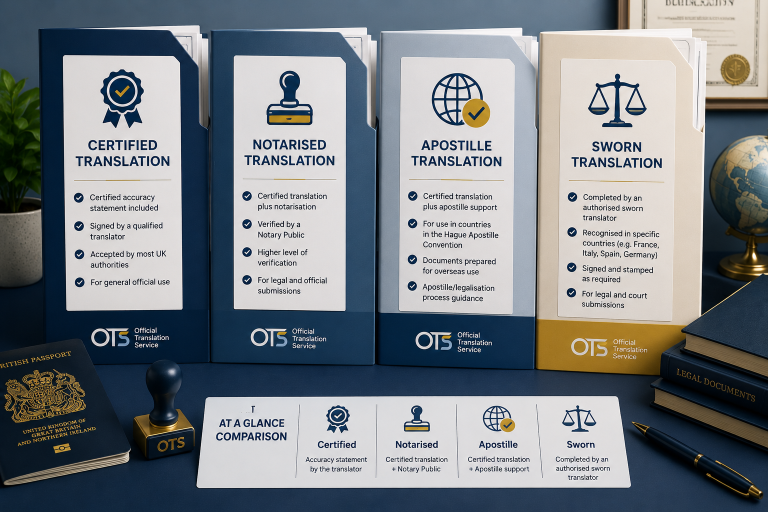
A certified translation is one that is accompanied by a signed statement from the translator or translation agency attesting to the accuracy and completeness of the translation. This certification is often necessary for documents that will be submitted to government bodies, educational institutions, or legal entities. In the UK, certified translations are typically required for documents such as birth certificates, marriage certificates, academic transcripts, and legal contracts.
Definition of Notarised Translation
A notarised translation normally involves a notary public witnessing or authenticating the translator’s certification or signature. The notary does not usually assess the linguistic accuracy of the translation itself. Whether notarisation is required depends on the receiving authority, jurisdiction and intended use of the document.
Legal Implications in the UK
Certified and notarised translations serve different functions. A certified translation focuses on the provider’s statement about the accuracy and completeness of the translation. Acceptance is always determined by the organisation receiving the document, so check its current instructions before ordering.
On the other hand, notarised translations carry the weight of a notary public’s endorsement, which can be crucial in legal contexts. For instance, if a document is to be used in a foreign court, a notarised translation may be required to ensure that the document is recognized and accepted by that jurisdiction. The notary’s involvement adds credibility and can help prevent disputes regarding the authenticity of the translation.
Key Differences Between Certified and Notarised Translation
Understanding the key differences between certified and notarised translations can help individuals and businesses make informed decisions about which type of translation they need. Here are the main distinctions:
Main Differences in Purpose
- Certified Translation: Primarily focuses on the accuracy of the translation. It is often used for documents that require official recognition but do not necessitate a notary’s verification.
- Notarised Translation: Involves the verification of the translator’s identity and the authenticity of the translation by a notary public. This is typically required for legal documents that may be scrutinized in international contexts.
Differences in Legal Standing
There is no single rule that makes one format legally superior in every case. UK organisations often accept certified translations for many official purposes, while some overseas authorities, courts, embassies or transactions may ask for notarisation, legalisation or another formality. Follow the recipient’s stated requirements.
Examples of Documents Requiring Each Type
To clarify further, here are examples of documents that typically require certified or notarised translations:
- Documents Requiring Certified Translation:
- Birth Certificates
- Marriage Certificates
- Academic Transcripts
- Legal Contracts
- Financial Statements
- Documents Requiring Notarised Translation:
- Powers of Attorney
- Affidavits
- Court Orders
- Wills and Testaments
- International Adoption Papers
When to Use Certified Translation
Certified translations are essential in various scenarios, particularly when dealing with official documents that require validation. Here are some common situations where certified translations are necessary:
Common Scenarios for Certified Translation
- Applying for a UK visa or immigration status, where official documents must be submitted to the Home Office.
- Submitting academic credentials to universities or colleges in the UK.
- Providing legal documents for court cases or legal proceedings.
Documents Typically Requiring Certification
Some documents that typically require certified translations include:
- Birth and Death Certificates
- Marriage and Divorce Certificates
- Academic Transcripts and Diplomas
- Legal Contracts and Agreements
Importance for Immigration and Legal Matters
For immigration and legal matters, translation requirements depend on the specific route, court, authority or proceeding. Where a required document is not in English or Welsh, current immigration guidance commonly asks for a full translation with specified certification or verification details. Courts and other recipients may use different requirements.
When to Use Notarised Translation
Notarised translations may be requested in some international legal or administrative contexts. Common examples include:
Common Scenarios for Notarised Translation
- When documents need to be presented in foreign courts.
- For international business transactions that require legal validation.
- In cases of adoption or guardianship where legal documents must be verified.
Documents Typically Requiring Notarisation
Documents that typically require notarised translations include:
- Powers of Attorney
- Affidavits and Statutory Declarations
- Legal Contracts for international agreements
- Wills and Testaments for cross-border inheritance issues
Importance for International Legal Processes
In international legal processes, notarised translations ensure that documents are accepted by foreign authorities. The notary public’s verification adds legitimacy to the translation, which can be crucial in preventing disputes or challenges regarding the authenticity of the documents. This is especially important in countries with strict legal requirements for foreign documents.
Which One Should You Choose: Certified or Notarised?
Choosing between certified and notarised translations depends on several factors. Here are some considerations to help you make the right decision:
Factors to Consider When Choosing
- Document Type: Determine whether the document requires certification or notarisation based on its intended use.
- Legal Requirements: Check the specific requirements of the authority or institution requesting the translation.
- International Use: If the document will be used internationally, consider whether notarisation is necessary for legal recognition.
Consulting with Professionals
It is advisable to consult with professional translation services to determine the most appropriate type of translation for your needs. Experienced translators can provide guidance based on the specific requirements of your documents and the intended use.
Cost Considerations
The cost of certified and notarised translations can vary based on factors such as the complexity of the document, the language pair, and the urgency of the request. Generally, notarised translations may incur additional fees due to the involvement of a notary public. It is essential to obtain quotes from translation services to understand the financial implications of your choice.
The Process of Obtaining Certified and Notarised Translations
Understanding the process for obtaining certified and notarised translations can help streamline your experience. Here are the steps involved:
Steps to Get a Certified Translation
- Select a Reputable Translation Service: Choose a translation agency that specializes in certified translations and has a good reputation.
- Submit Your Document: Provide the original document and specify the language pair for translation.
- Receive the Translation: Once completed, the translator will provide a certified translation along with a signed statement of accuracy.
Steps to Get a Notarised Translation
- Choose a Translation Service with Notary Services: Ensure the agency can provide notarisation as part of their service.
- Submit Your Document for Translation: Provide the original document for translation and indicate that notarisation is required.
- Notarisation Process: After translation, the document will be presented to a notary public for verification.
- Receive the Notarised Translation: You will receive the notarised translation, which includes the notary’s seal and signature.
Timeframes and Costs Involved
Timing depends on document length, language pair, legibility, certification route and whether a notary or other third party must be involved. Send the complete file, recipient requirements and deadline for a confirmed timeframe and price.
Conclusion: Making the Right Choice for Your Translation Needs
In summary, understanding the differences between certified and notarised translations is essential for navigating legal and official documentation in the UK. Certified translations are suitable for most official purposes, while notarised translations are necessary for documents that require legal validation in international contexts. Always consider the specific requirements of your situation and consult with professional translation services to ensure you choose the right type of translation for your needs.
For any translation needs, whether certified or notarised, seek professional help to ensure accuracy and compliance with legal requirements. Contact us today to get started on your translation journey!
Frequently Asked Questions
What is the difference between certified and notarised translation?
A certified translation includes an accuracy statement from the translator or provider. A notarised translation adds a notarial step, usually around the translator’s signature or certification rather than the linguistic accuracy itself.
When should I use a certified translation?
Use certified translations for legal documents, immigration papers, and official submissions.
What does notarised translation mean in the UK?
In the UK, notarisation usually means a notary public witnesses or authenticates the translator’s signature or certification. Check what the receiving authority specifically requires.
Can I use a certified translation for all purposes?
Not always; some situations may specifically require notarised translations.
How do I choose between certified and notarised translation?
Consider the document type, legal requirements, and consult with a translation professional.
Need help choosing the correct route? See our notarised translation service, certified translation service, or send the document and recipient instructions for review.