Understanding Persian to English Translation for UK
Accurate translation of documents from Persian to English is crucial for individuals seeking to navigate various official processes in the UK. Whether for immigration, education, or legal purposes, the integrity of the translated document can significantly influence the outcome of applications and proceedings. Inaccurate translations can lead to misunderstandings, delays, or even rejections of applications, making it essential to engage professional translation services that specialize in Persian to English translation.
Common types of documents that often require translation include:
- Birth and Marriage Certificates: These documents are frequently needed for visa applications, residency permits, and family reunification.
- Academic Transcripts: Students applying for universities in the UK must provide translated transcripts to demonstrate their qualifications.
- Legal Documents: Contracts, court orders, and affidavits often require precise translations to maintain their legal standing.
- Medical Records: For healthcare services or immigration purposes, accurate translations of medical documents are vital.
- Financial Statements: Bank statements and other financial documents may be needed for visa applications or legal processes.
The importance of accurate translation cannot be overstated. It not only ensures compliance with UK regulations but also facilitates clear communication between parties involved. Therefore, understanding the nuances of the Persian language and the specific requirements of UK authorities is essential for any successful translation process.
The Persian Document Translation Process
The process of translating Persian documents into English involves several key steps to ensure accuracy and compliance with UK standards. Here’s a detailed guide to help you navigate this process:
- Identify the Document Type: Determine the specific type of document you need to translate. This could range from personal documents like birth certificates to more complex legal documents. Each type may have different requirements for translation.
- Choose a suitable translator: Select a provider with strong Persian-English capability and experience translating the specific document type for its intended use.
- Prepare the Document: Ensure that the document is clear and legible. If it is handwritten, consider providing a typed version to avoid misinterpretation. If the document is in poor condition, it may be necessary to recreate it before translation.
- Submit the Document for Translation: Once you have chosen a translator, submit the document along with any specific instructions regarding formatting or terminology. Discuss deadlines and costs upfront to avoid any surprises later.
- Review the Translation: After receiving the translated document, review it for accuracy. If possible, have a second translator or a bilingual individual verify the translation to ensure it meets your needs.
- Obtain Certification: If the translation is for official use, request a certification from the translator. This certification attests to the accuracy and completeness of the translation, which is often required by UK authorities.
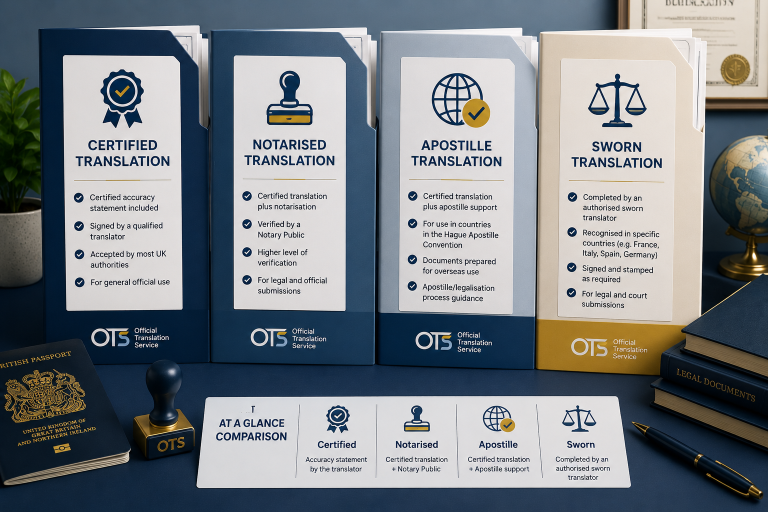
Key considerations during this process include understanding the specific requirements of the document’s intended use, such as whether it needs to be notarized or apostilled. Additionally, be aware of any cultural nuances that may affect the translation, as these can impact the document’s acceptance.
Certified Translation: What You Need to Know
A certified translation is a translation that comes with a signed statement from the translator or translation service, affirming that the translation is accurate and complete. This certification is crucial for documents that will be submitted to UK authorities, such as for visa applications or legal proceedings.
Certification is required by many official recipients where a document is not in the language they accept. For UK immigration, the exact translation requirement depends on the visa route and supporting document. Here is a practical way to prepare an official-use translation:
- Choose the right expertise: Use a translator or provider with Persian-English language capability and experience with the relevant legal, academic, financial, medical or personal document type.
- Request Certification: When submitting your documents for translation, explicitly request a certified translation. The translator will provide a signed statement of accuracy along with the translated documents.
- Check recipient requirements: For immigration use, follow the guidance for the specific visa route. Where certification is required, include the accuracy statement and translator verification details specified by that guidance.
- Keep Copies: Retain copies of both the original and translated documents, along with the certification, for your records. This can be useful in case of any discrepancies or further requests from authorities.
Understanding the certified translation process is essential for anyone looking to submit documents to UK authorities. It ensures that your translations are not only accurate but also recognized as valid by official institutions.
Choosing the Right Translation Service
Selecting the right translation service for Persian to English translations involves several critical factors. The quality of the translation can significantly affect the outcome of your application or legal matter, making it important to choose wisely. Here are key qualities to consider:
- Persian-English expertise: Ensure the provider has strong command of both languages and understands the terminology and context of your document.
- Specialization in Document Type: Look for services that specialize in the type of document you need translated. For example, if you require a legal document translation, choose a service with experience in legal translations.
- Certification capability: Confirm that the provider can supply the certification format required by the organisation receiving the document.
- Positive Reviews and Testimonials: Research the service’s reputation by reading reviews and testimonials from previous clients. This can provide insight into their reliability and quality of service.
- Transparent Pricing: Choose a service that offers clear pricing structures without hidden fees. Request quotes from multiple services to compare costs and ensure you are getting a fair deal.
- Customer Support: A good translation service should provide excellent customer support. They should be responsive to inquiries and willing to answer any questions you may have throughout the translation process.
By carefully considering these factors, you can select a translation service that meets your needs and ensures high-quality translations for your Persian documents.
Common Challenges in Persian to English Translation
Translating documents from Persian to English can present several challenges, primarily due to linguistic and cultural differences. Understanding these challenges can help in selecting the right translator and ensuring accurate translations. Here are some common issues encountered:
- Cultural Nuances: Persian language is rich in cultural references and idiomatic expressions that may not have direct equivalents in English. A skilled translator must understand these nuances to convey the intended meaning accurately.
- Technical Jargon: Many documents, especially legal or medical ones, contain specialized terminology that requires a translator to have expertise in the relevant field. Misinterpretation of technical terms can lead to significant issues in legal or medical contexts.
- Variations in Dialect: Persian has various dialects, and the translator must be aware of these differences to ensure the translation is appropriate for the intended audience.
- Formatting Issues: The layout and formatting of documents can differ significantly between Persian and English. Ensuring that the translated document maintains the original’s clarity and structure is essential.
Addressing these challenges requires a translator who is not only linguistically skilled but also culturally aware and experienced in the specific field of the documents being translated.
Cost Factors in Persian Document Translation
Understanding the cost factors associated with Persian to English document translation is essential for budgeting your translation needs effectively. Several variables can influence the pricing of translation services:
- Document Type: The type of document being translated can significantly affect the cost. Legal documents, for example, may require more specialized knowledge, resulting in higher fees compared to simpler documents.
- Length of the Document: Generally, translation services charge per word or per page. Longer documents will naturally incur higher costs. Be sure to provide accurate word counts when requesting quotes.
- Turnaround time: Timing depends on document length, complexity, formatting and certification requirements. Confirm your deadline before ordering.
- Certification Requirements: If you require a certified translation, there may be additional fees for the certification process. Ensure you clarify these costs upfront to avoid surprises.
- Complexity of the Content: Technical or specialized content may require a translator with specific expertise, which can also affect pricing. It’s important to communicate the nature of the content when requesting a quote.
To budget effectively for your translation needs, it is advisable to request quotes from multiple translation services. This will allow you to compare prices and services, ensuring you find a provider that meets your needs without exceeding your budget.
Frequently Asked Questions about Persian Translation
What is the process for translating Persian documents to English?
The process involves identifying the document type, choosing a certified translator, and submitting the document for translation. After translation, you should review the document and obtain certification if necessary.
How long does it take to translate a Persian document?
Turnaround depends on document length, complexity, formatting, language direction and certification requirements.
What is a certified translation and why is it necessary?
A certified translation includes a signed statement confirming accuracy and completeness. Whether certification is required, and what details it must include, depends on the receiving organisation or visa route.
Can I translate my own documents from Persian to English?
For formal use, check the recipient’s rules. Where an independent certified translation is required, a self-translation will not satisfy that requirement.
What are the costs associated with Persian to English translation?
Costs can vary based on document type, length, and certification requirements. It’s advisable to request quotes from multiple services for comparison to find the best fit for your budget.
Persian Certified Document Translation for UK Use
Persian-to-English translation can cover civil certificates, identity documents, academic records, legal papers, medical reports and financial documents. Because there is no live national Persian language page on the site, use our certified translation service or send the document online and specify Persian as the source language.