Understanding the Impact of Brexit on EU Document Translation
Brexit changed many UK–EU legal and administrative arrangements, but it did not create one universal rule requiring every EU document used in the UK to have a certified translation. Translation, certification and legalisation requirements depend on the specific process and the organisation receiving the document.
There is no general post-Brexit government mandate that all EU documents must be translated by a particular type of “certified translator.” For example, GOV.UK’s general guidance on certifying a translation focuses on the certification statement and tells users to check the requirements of the organisation that needs the document. Immigration, education, court and professional-registration processes may each use different rules.
Recognition of an EU-issued document depends on what the document is and why it is being used. A university, regulator, court, employer, bank or immigration authority may ask for an English translation, certification, verification or legalisation, but translation does not by itself make a document “valid in the UK.”
The practical task is to identify the receiving organisation’s current requirements before ordering translation. This avoids paying for certification, notarisation or apostille services that may not be needed for the particular use.
Post-Brexit document use is process-specific. Check the current rules for the actual application or transaction, then commission the level of translation or certification that the recipient asks for.
What is Certified Translation and Why is it Important?
Certified translation refers to the process of translating documents by a qualified translator who provides a signed statement attesting to the accuracy and completeness of the translation. This certification is crucial for legal and official purposes, as it assures authorities that the translation is reliable and adheres to the required standards.
Certified translations are used in many official processes, but the documents and certification details vary. Some immigration routes, universities, courts or regulators may require full certified translations; other processes may accept documents differently. Always use the current instructions for the specific application.
If a process requires a certified translation and the submitted version does not meet that requirement, the recipient may request further evidence or delay its review. Certification itself does not guarantee acceptance or approval.
Additionally, certified translations play a vital role in maintaining the integrity of official records. For example, educational institutions may require certified translations of academic transcripts to evaluate foreign qualifications accurately. This ensures that students receive appropriate recognition for their educational achievements, facilitating their integration into the UK education system.
Certification records responsibility for the translation’s accuracy and completeness. Legal recognition of the source document is a separate question that depends on the relevant UK process and any international formalities that apply.
Brexit Translation Requirements for EU Documents
There is no single “Brexit translation standard” for EU documents. Each UK authority, regulator, institution or private recipient can have its own document rules, and some immigration routes have their own detailed translation requirements.
Where certification is required, the translation should include the details requested by the recipient. A specific professional-body accreditation is not a universal UK requirement unless the relevant process says so.
Common types of documents requiring certified translation include:
- Legal Contracts: Any legal agreements, including business contracts and property deeds, must be accurately translated to ensure all parties understand their rights and obligations.
- Birth and Marriage Certificates: These vital records often require translation for immigration applications, legal proceedings, or personal identification purposes.
- Academic Transcripts: Students applying for educational opportunities in the UK must provide certified translations of their academic records to validate their qualifications.
- Financial Documents: Bank statements, tax returns, and other financial records may need to be translated for visa applications or legal matters.
- Medical Records: In cases where medical history is relevant, certified translations of health documents may be required for immigration or legal purposes.
Translations should be complete and accurate and should preserve material details such as names, dates, reference numbers, stamps and annotations. Formatting and certification should follow the receiving organisation’s instructions.
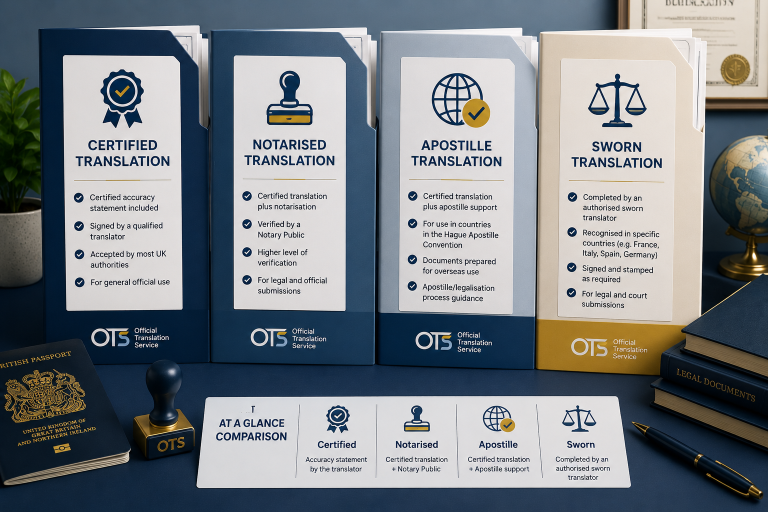
Some cross-border documents may also need an apostille or another legalisation step. That requirement depends on the document, issuing country, destination and receiving authority; an apostille authenticates the origin of a public document and does not certify translation accuracy.
How to Translate EU Documents After Brexit
Translating EU documents after Brexit involves several key steps to ensure accuracy and compliance with legal requirements. The process can be complex, but following a structured approach can help individuals and businesses navigate the challenges effectively.
1. Identify the Documents Requiring Translation: The first step is to determine which documents need to be translated. This may include legal contracts, academic transcripts, or personal identification documents. Understanding the specific requirements for each document type is crucial.
2. Choose a suitable translation service: Look for relevant language and document experience, clear quality controls and the ability to provide the certification format requested by the recipient. Do not assume a particular accreditation is mandatory unless the recipient says so.
3. Provide Clear Instructions: When submitting documents for translation, provide clear instructions regarding the purpose of the translation and any specific requirements. This may include formatting preferences or the need for additional certification, such as an apostille.
4. Review the Translations: Once the translations are completed, review them carefully to ensure accuracy and completeness. It may be beneficial to have a second pair of eyes review the documents, especially if they contain complex legal or technical language.
5. Obtain certification if required: Where the recipient asks for a certified translation, ensure the provider supplies a signed statement confirming responsibility for accuracy and completeness. Certification does not itself create legal recognition.
6. Submit Translated Documents: Finally, submit the translated documents to the relevant authorities or institutions as required. Be aware of any additional requirements, such as notarization or apostille, that may be necessary for the documents to be recognized legally.
By following these steps, individuals can ensure that their EU documents are translated accurately and comply with post-Brexit requirements. Working with qualified professionals and understanding the specific needs for each document type will facilitate a smoother translation process and help avoid potential pitfalls.
EU Document Recognition in the UK Post-Brexit
The recognition of EU documents in the UK has undergone significant changes following Brexit. Understanding how these documents are treated is crucial for individuals and businesses navigating the new legal landscape.
Document recognition was never one single rule across every EU document and UK use case, and Brexit did not replace it with one universal certified-translation rule. The applicable requirements depend on the particular legal, immigration, academic, professional or commercial process.
For instance, educational qualifications such as diplomas and degrees may need to be translated and certified to be recognized by UK educational institutions. This requirement ensures that foreign qualifications are evaluated accurately and fairly, allowing students to pursue further education or professional opportunities in the UK.
Similarly, personal documents like marriage and birth certificates may require translation and certification for legal purposes, such as immigration applications or family law matters. Failure to provide certified translations can result in delays or rejections of applications, emphasizing the importance of compliance with the new recognition standards.
Legal implications for unrecognized documents can be significant. Individuals may face challenges in proving their identity, marital status, or educational qualifications, which can impact their ability to work, study, or reside in the UK. Therefore, it is essential to understand the specific requirements for each document type and ensure that translations are completed accurately and certified appropriately.
For an EU-issued document used in the UK, start with the recipient’s current document instructions. Translate, certify, notarise or legalise only to the extent that the particular process requires.
Finding Certified Translators for EU Documents
Finding qualified translators for EU documents is a critical step in ensuring that translations are accurate and legally recognized. The process of selecting a certified translation service requires careful consideration of several factors.
1. Check relevant credentials: Professional qualifications and memberships can be useful quality signals, but they are not a universal acceptance rule. The provider’s ability to meet the recipient’s certification requirements is more important.
2. Check Reviews and Testimonials: Research potential translation services by reading reviews and testimonials from previous clients. Positive feedback can provide insight into the quality of service and reliability of the translators, helping you make an informed decision.
3. Assess Specialization: Depending on the nature of the documents you need to translate, consider translators who specialize in specific fields, such as legal, medical, or academic translations. Specialized translators are more likely to understand the nuances and terminology relevant to your documents, ensuring greater accuracy.
4. Request Samples: If possible, request samples of previous translations to evaluate the quality of the translator’s work. This can help you gauge their proficiency and attention to detail, which are crucial for certified translations.
5. Inquire About Turnaround Times: Consider the urgency of your translation needs and inquire about the turnaround times offered by different services. Ensure that the translator can meet your deadlines without compromising the quality of the translation.
6. Discuss Pricing: While cost should not be the sole determining factor, it is important to understand the pricing structure of the translation service. Be wary of extremely low prices, as they may indicate a lack of quality or experience. Aim for a balance between affordability and quality.
By following these guidelines, individuals can find qualified translators who are capable of providing certified translations for EU documents. Ensuring that the selected service meets the necessary accreditation and specialization requirements will contribute to a smoother translation process and successful outcomes.
Common Challenges in EU Document Translation After Brexit
Translating EU documents after Brexit presents several challenges that individuals and businesses must navigate. Understanding these challenges can help mitigate risks and ensure compliance with legal requirements.
1. Understanding New Legal Requirements: The most significant challenge is the evolving legal landscape regarding document translation. Individuals must stay informed about the latest requirements for certified translations, including which documents need to be translated and the specific standards that must be met.
2. Finding Qualified Translators: As demand for certified translations increases, finding qualified translators who are familiar with post-Brexit requirements can be challenging. Many translators may not have the necessary accreditation or experience, leading to potential issues with document recognition.
3. Ensuring Accuracy and Completeness: The accuracy of translations is paramount, especially for legal and official documents. Errors or omissions can lead to significant consequences, including delays in applications or legal proceedings. Ensuring that translators are meticulous and detail-oriented is crucial.
4. Navigating Certification Processes: The process of obtaining certification for translations can be complex, particularly if additional verification, such as an apostille, is required. Understanding these processes and ensuring compliance can be time-consuming and may require additional resources.
5. Dealing with Cultural Nuances: Translating documents often involves more than just converting words from one language to another. Cultural nuances and context must be considered to ensure that the translation accurately reflects the intended meaning. This can be particularly challenging for legal and technical documents.
6. Managing Time Constraints: Many individuals and businesses face tight deadlines for submitting translated documents. Balancing the need for accuracy with the urgency of timelines can create additional pressure, making it essential to plan ahead and allow sufficient time for the translation process.
By being aware of these challenges, individuals can take proactive steps to address potential issues and ensure that their EU document translations are completed accurately and in compliance with post-Brexit requirements. Working with qualified professionals and staying informed about legal changes will facilitate a smoother translation process.
Conclusion: Navigating EU Document Translation in a Post-Brexit World
For EU documents used in the UK, requirements should be checked against the current process rather than a generic post-Brexit rule. Certified translation can document responsibility for accuracy, but it does not by itself make the source document legally recognised.
By staying informed about the specific requirements for various document types and working with qualified translators, individuals can navigate the complexities of post-Brexit translation effectively. Awareness of potential challenges and proactive planning will contribute to successful outcomes, whether for immigration applications, legal proceedings, or educational opportunities.
In conclusion, navigating EU document translation in a post-Brexit world requires diligence, attention to detail, and a commitment to compliance. By prioritizing certified translations and understanding the implications of Brexit, individuals can ensure that their documents are recognized and accepted in the UK, facilitating smoother interactions with authorities and institutions.
Frequently Asked Questions
What are the Brexit translation requirements for EU documents?
There is no universal Brexit rule requiring every EU document to use a certified translator. Check the receiving organisation’s current requirements for the specific document and purpose.
How do I find a certified translator for my EU documents?
Look for relevant language and document experience, quality controls and the ability to meet the recipient’s certification requirements. Professional accreditation can be useful where relevant but is not universally mandatory.
Are all EU documents recognized in the UK after Brexit?
Recognition depends on the document and the process in which it is used. Translation, certification or legalisation may be required, but none is universal for all EU documents.
What types of EU documents typically require translation?
Common types include legal contracts, birth and marriage certificates, and academic transcripts.
What challenges might I face when translating EU documents after Brexit?
The main challenge is identifying the correct current requirement for the receiving organisation rather than assuming Brexit created a single translation standard.
GOV.UK’s general guidance on certified translations says the translator should confirm accuracy, date the translation and provide their name and contact details, while also telling users to check the organisation that needs the document for any specific rules. For translation support, see our certified translation service.