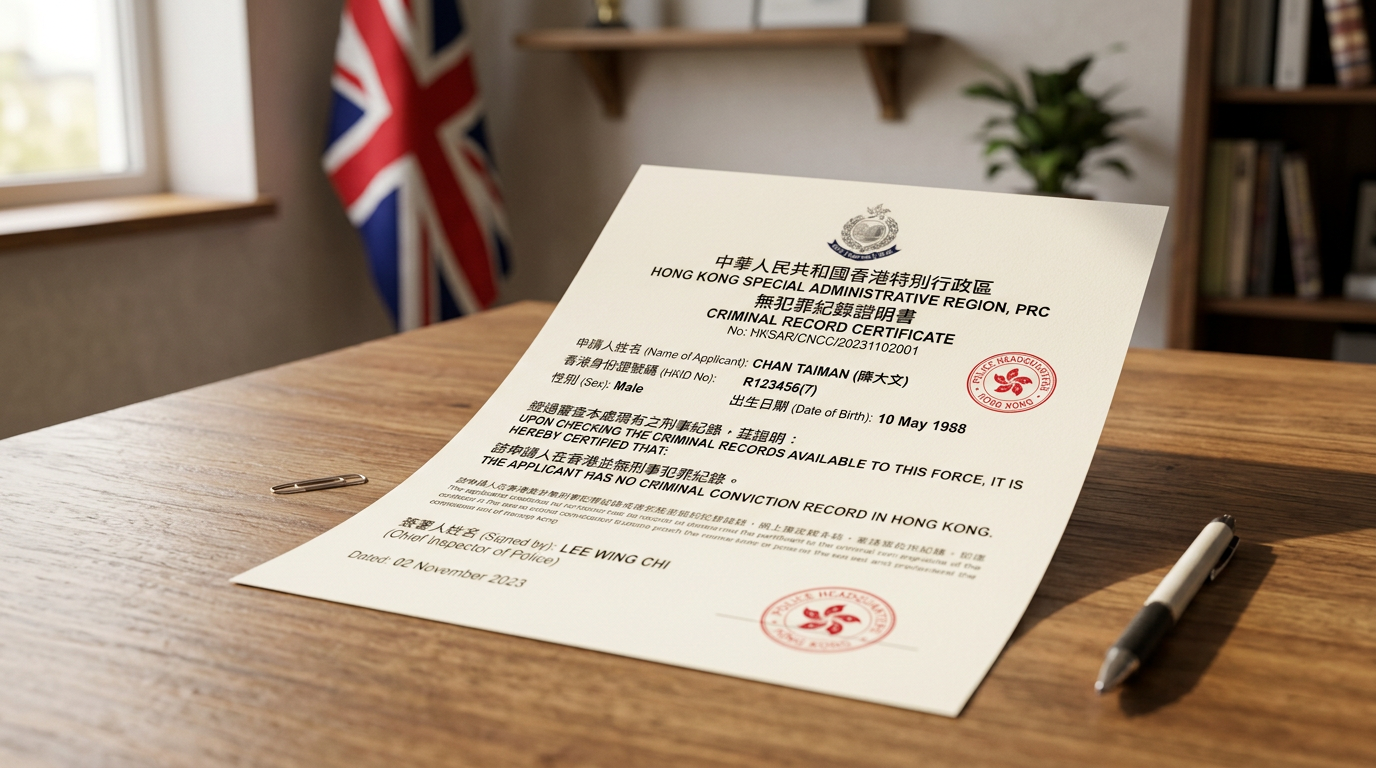
Understanding the Importance of Cantonese Criminal Record Certificate Translation
A Cantonese criminal record certificate may need English translation when it is being used for immigration, employment, legal or other official purposes in the UK. Because the document can contain names, dates, offences, outcomes and official annotations, the translation should reflect the source carefully and be prepared for the specific recipient.
For immigration use, follow the translation requirements of the specific route. Accurate rendering is particularly important for criminal-record evidence because the recipient needs to distinguish the exact entries and outcomes shown on the original certificate.
Employment and other background-check processes can also require documents issued overseas to be understood in English. Whether a certified translation is needed depends on the employer, regulator or other organisation receiving the certificate.
What is a Cantonese Criminal Record Certificate?
A Cantonese criminal record certificate is an official document issued by law enforcement agencies in regions where Cantonese is spoken, such as Hong Kong. This certificate provides a comprehensive account of an individual’s criminal history, detailing any arrests, convictions, or other legal matters that may have occurred. The primary purpose of this document is to inform authorities, employers, and other relevant parties about an individual’s legal standing.
In the UK, the certificate is commonly used in various scenarios, including immigration applications, employment screenings, and legal proceedings. For example, when applying for a visa, the Home Office may request a criminal record certificate to evaluate the applicant’s background. Similarly, employers may require this document as part of their hiring process, especially for positions that involve working with vulnerable populations or in sensitive environments. Understanding the significance of this document is essential for anyone seeking to work or reside in the UK, as it plays a pivotal role in establishing credibility and trustworthiness.
When Do You Need a Cantonese Criminal Record Certificate Translation in the UK?
A translation may be needed when a criminal record certificate forms part of an immigration, employment, licensing or legal submission and the recipient requires the information in English. For immigration, check the evidence list and language rules for the exact route rather than assuming every application requires the same document.
Another significant scenario involves employment. Many employers in the UK conduct background checks as part of their hiring process. If an applicant has a criminal record certificate issued in Cantonese, they will need a certified translation to provide to their potential employer. This is especially important in sectors such as healthcare, education, and finance, where a clear understanding of an individual’s background is essential for maintaining safety and compliance with regulatory standards.
Legal proceedings also necessitate accurate translations of criminal record certificates. If an individual is involved in a court case, having a properly translated document can be vital for presenting their case effectively. Inaccurate translations can lead to misunderstandings and potentially adverse outcomes in legal matters. Overall, understanding when a translation is required ensures that individuals can navigate their legal and professional journeys in the UK without unnecessary obstacles.
How to Translate a Cantonese Criminal Record Certificate
Translating a Cantonese criminal record certificate involves several steps to ensure accuracy and compliance with legal requirements. The first step is to obtain the original document from the relevant authorities in the Cantonese-speaking region. This document should be a certified copy to ensure its authenticity.
Once you have the original document, the next step is to select a professional translation service. It is crucial to choose a service that specializes in legal translations and has experience with criminal record certificates. Look for translators who are fluent in both Cantonese and English and possess a deep understanding of legal terminology. This expertise is essential for ensuring that the translation is not only accurate but also compliant with the standards set by UK authorities.
After selecting a translation service, provide them with the original document and any specific requirements from the Home Office or UKVI regarding the translation. This may include formatting guidelines, certification requirements, and any additional information that needs to be included in the translated document.
Once the translation is complete, review the document carefully to ensure that all information is accurately represented. It is advisable to have a second pair of eyes review the translation to catch any potential errors. After confirming the accuracy of the translation, request a certified copy from the translation service. This certification is crucial, as it verifies that the translation meets the necessary legal standards for submission to authorities.
In summary, the process of translating a Cantonese criminal record certificate involves obtaining the original document, selecting a qualified translation service, providing necessary information, and ensuring the accuracy and certification of the translation. Taking these steps can help individuals avoid potential complications in their legal and immigration processes.
Certified Translation: What You Need to Know
A certified translation includes a signed statement confirming responsibility for the translation’s accuracy and completeness. Whether certification is required for a Cantonese criminal record certificate depends on the receiving authority or application route.
To be considered certified, the translation must include specific elements. Typically, this includes a statement from the translator confirming their qualifications, the accuracy of the translation, and their contact information. Additionally, the translation should be formatted in a way that closely mirrors the original document, maintaining the structure and layout to facilitate easy comparison.
For immigration use, follow the current route guidance for what certification details and supporting copies are required. Do not assume that letterhead, stamps or a particular professional membership are universally mandatory.
Understanding the requirements for certified translations is crucial for individuals seeking to navigate the UK immigration system. By ensuring that their Cantonese criminal record certificate is translated and certified correctly, applicants can present their documentation confidently and avoid unnecessary complications in their processes.
Choosing the Right Translation Service for Your Needs
Selecting the right translation service is a critical step in ensuring that your Cantonese criminal record certificate is translated accurately and efficiently. There are several key factors to consider when making your choice.
- Experience: Look for a translation service with a proven track record in legal translations, particularly those involving criminal record certificates. Experience in the specific requirements of the Home Office and UKVI is a significant advantage.
- Relevant credentials and experience: Professional membership can be a useful quality signal, but experience with criminal-record documents and the recipient’s requirements is more important than any single accreditation.
- Turnaround Time: Consider the time frame within which you need the translation completed. Different services offer varying turnaround times, so it is important to choose one that can meet your deadlines without compromising quality.
- Customer Reviews: Research customer feedback and testimonials to gauge the service’s reputation. Positive reviews from previous clients can provide insights into the quality of service and customer support.
- Cost: While cost should not be the sole determining factor, it is important to compare pricing among different services. Be wary of prices that seem too low, as they may indicate a lack of quality or experience.
By carefully evaluating these factors, you can select a translation service that meets your needs and ensures that your Cantonese criminal record certificate is translated accurately and professionally. This choice can significantly impact the success of your immigration or employment applications in the UK.
Common Mistakes to Avoid in Cantonese Criminal Record Certificate Translation
When it comes to translating a Cantonese criminal record certificate, there are several common mistakes that individuals should be aware of to avoid legal complications. One of the most significant errors is relying on unqualified translators or attempting to translate the document independently. Legal terminology can be complex and nuanced, and a lack of understanding can lead to inaccuracies that may jeopardize an application or legal standing.
Another common mistake is not providing the translator with the receiving organisation’s current instructions. Sharing the intended use helps the provider prepare the translation and certification in the right format.
If the receiving organisation requires certification, make sure the translation includes the requested accuracy statement and provider details before submission.
Lastly, neglecting to review the translated document thoroughly can result in overlooked errors. Even minor mistakes can have serious implications, so it is advisable to have a second party review the translation for accuracy and completeness. By avoiding these common pitfalls, individuals can ensure that their Cantonese criminal record certificate translation is handled correctly, facilitating a smoother process in their legal and immigration journeys.
Frequently Asked Questions about Cantonese Criminal Record Certificate Translation
What is a Cantonese criminal record certificate?
A Cantonese criminal record certificate is a document that outlines an individual’s criminal history in Cantonese, issued by law enforcement agencies in Cantonese-speaking regions.
Why do I need a certified translation for my criminal record certificate?
A certified translation may be required by the receiving authority. Check the specific application or submission rules to confirm the required format.
How long does it take to translate a Cantonese criminal record certificate?
Turnaround depends on the certificate length, legibility, language pair, certification requirements and current availability.
What should I look for in a translation service?
When selecting a translation service, consider their experience, accreditation, turnaround time, and customer reviews to ensure quality and reliability.
Can I translate my own criminal record certificate?
For official use, follow the receiving organisation’s rules. If independent certification is required, a self-translation would not meet that requirement.