Understanding Thai Certified Translation
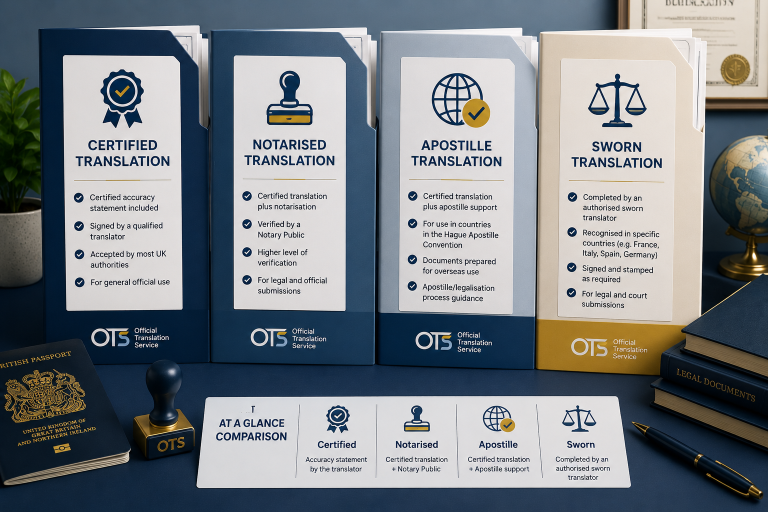
Thai certified translation means translating a Thai document into English, or vice versa, and supplying a signed certification statement when the receiving organisation requires one. Certification records responsibility for the translation’s accuracy and completeness; it does not automatically make the document legally recognised for every purpose.
Thai certified translation may be requested for legal, immigration, academic, financial or other official uses. Courts and other organisations can set their own requirements for translated material, so check the instructions for the specific proceeding or submission instead of assuming one UK-wide rule.
In addition to legal contexts, Thai certified translations are also vital for immigration purposes. When applying for visas or residency in the UK, applicants must often submit various documents, including birth certificates, marriage certificates, and academic qualifications, all of which may need to be translated into English. Without a certified translation, these documents may be rejected, delaying the application process and potentially impacting the individual’s immigration status.
Furthermore, the significance of certified translations extends to academic settings. Students from Thailand seeking admission to UK educational institutions must provide certified translations of their academic records. This ensures that admissions committees can accurately assess the qualifications of international applicants. In summary, Thai certified translation plays a critical role in facilitating communication and understanding in legal, immigration, and academic contexts, making it an indispensable service for individuals and organizations alike.
Why You Might Need Thai Certified Translation in the UK
There are several common scenarios where Thai certified translation is required in the UK. Understanding these scenarios can help individuals and organizations prepare for situations that necessitate this specialized service.
- Legal Documents: Legal proceedings often require the submission of documents that have been translated into English. This includes contracts, court filings, and other legal notices. A certified translation ensures that these documents are recognized by the legal system, preventing any potential misunderstandings or disputes.
- Immigration Applications: When applying for visas, residency, or citizenship in the UK, applicants must provide various personal documents, such as birth and marriage certificates, which may be in Thai. These documents must be translated by a certified translator to meet the requirements set forth by the UK Home Office.
- Academic Purposes: Students from Thailand who wish to study in the UK must submit their academic transcripts and certificates in English. Certified translations are often required to validate the authenticity of these documents, allowing educational institutions to assess the applicant’s qualifications accurately.
- Business Transactions: Companies engaging in business with Thai partners may need to translate contracts, agreements, and other legal documents into English. Certified translations ensure that all parties understand the terms and conditions, reducing the risk of legal issues arising from misinterpretations.
- Healthcare Documentation: In cases where Thai patients require medical treatment in the UK, their medical records and history may need to be translated. Certified translations of these documents ensure that healthcare providers have accurate information to deliver appropriate care.
In each of these scenarios, the need for Thai certified translation is clear. It not only facilitates communication but also ensures compliance with legal and institutional requirements, thereby safeguarding the interests of individuals and organizations.
Thai Certified Translation Requirements
To obtain a Thai certified translation in the UK, certain requirements must be met. These requirements ensure that the translation is of high quality and legally valid.
The provider should have appropriate Thai-English language competence and experience with the document type involved. Translation qualifications or membership of bodies such as ITI or CIOL can be useful quality signals, but they are not universally mandatory for every certified translation in the UK.
Where certification is requested, the translation should include the signed accuracy statement and provider details required by the receiving organisation. The exact wording and identifying information can vary by recipient.
Additionally, the original document must be provided to the translator. This ensures that the translation is based on a complete and accurate source. In some cases, the translator may also need to verify the authenticity of the original document, particularly if it is a legal or official document.
Formatting should make it easy to compare the translation with the source and should identify stamps, seals, signatures and handwritten notes where relevant. Any specific layout requirement should come from the receiving organisation rather than from a supposed universal UK format.
In summary, the requirements for Thai certified translation in the UK emphasize the importance of using qualified translators, providing accurate statements of accuracy, and adhering to formatting standards. Meeting these requirements ensures that the translation is legally recognized and serves its intended purpose effectively.
The Process of Obtaining a Thai Certified Translation
The process of obtaining a Thai certified translation involves several steps, each designed to ensure the accuracy and legality of the translated document.
- Select a Qualified Translator: The first step is to choose a certified translator with experience in Thai to English translations. It is advisable to check their qualifications and client reviews to ensure they are reputable and capable of delivering high-quality translations.
- Submit the Original Document: Once a translator is selected, the client must provide the original document that requires translation. This can be done via email or in person, depending on the translator’s preferences.
- Receive a Quote: After reviewing the document, the translator will provide a quote for the translation service. This quote typically includes information about the cost, estimated turnaround time, and any additional fees for urgent requests.
- Translation Process: Upon acceptance of the quote, the translator will begin the translation process. This involves translating the document while ensuring that all nuances and meanings are accurately conveyed in the target language.
- Review and Quality Assurance: After completing the translation, the translator may conduct a review to ensure accuracy and consistency. Some translation services also employ a second translator to proofread the document before it is finalized.
- Issuing the Certified Translation: Once the translation is complete and has been reviewed, the translator will issue the certified translation along with a signed statement of accuracy. This document will be formatted according to legal requirements, ensuring it is ready for submission to authorities or institutions.
- Delivery of the Translation: The final step is the delivery of the certified translation to the client. This can be done electronically or via postal service, depending on the client’s preference.
Turnaround depends on the document length, legibility, language direction, specialist terminology, formatting and certification requirements. Send the complete file and deadline for a confirmed timeframe.
Understanding this process is crucial for individuals and organizations needing certified translations, as it helps set expectations and ensures that all necessary steps are followed to obtain a legally recognized document.
Choosing the Right Translation Service in the UK
When selecting a translation service for Thai certified translation in the UK, several factors should be considered to ensure that you receive high-quality and reliable service.
- Reputation: Research the reputation of the translation service. Look for reviews and testimonials from previous clients to gauge their level of satisfaction. A reputable service will have a track record of delivering accurate and timely translations.
- Experience: Consider the experience of the translators within the service. Experienced translators are more likely to understand the nuances of both Thai and English languages, which is crucial for producing accurate translations.
- Specialization: Ensure that the translation service specializes in certified translations. Some services may focus on general translations, but certified translations require specific expertise and adherence to legal standards.
- Turnaround Time: Inquire about the typical turnaround time for certified translations. If you have a deadline, it is essential to choose a service that can meet your timeline without compromising quality.
- Cost: Compare pricing among different translation services. While cost should not be the sole determining factor, it is important to find a service that offers competitive pricing without sacrificing quality.
- Customer Support: Evaluate the level of customer support provided by the translation service. A responsive and helpful customer service team can make the process smoother and address any concerns you may have.
By considering these factors, individuals and organizations can make informed decisions when choosing a translation service for Thai certified translation in the UK. Selecting the right service is crucial for ensuring that the translated documents are accurate, legally valid, and delivered on time.
Common Misconceptions About Thai Certified Translation
There are several misconceptions surrounding Thai certified translation that can lead to confusion and misunderstanding. Addressing these myths can help individuals navigate the translation process more effectively.
- Myth 1: All Translations Are Certified: Many people assume that any translation can be considered certified. In reality, a certified translation must be completed by a qualified translator who provides a signed statement of accuracy. Not all translations meet these criteria.
- Myth 2: Certified Translations Are Only for Legal Documents: While certified translations are commonly required for legal documents, they are also necessary for immigration applications, academic submissions, and business transactions. Any official document requiring translation may necessitate certification.
- Myth 3: Online Translation Tools Are Sufficient: Some individuals believe that online translation tools can replace the need for certified translations. However, these tools often lack the accuracy and contextual understanding necessary for legal and official documents, making professional translation essential.
- Myth 4: Certified Translations Are Expensive: While the cost of certified translations can vary, many translation services offer competitive pricing. It is important to compare quotes and consider the value of accurate and legally recognized translations.
- Myth 5: The Process Is Complicated: The process of obtaining a certified translation may seem daunting, but it is typically straightforward. By selecting a reputable translation service and following the necessary steps, individuals can obtain their certified translations without excessive hassle.
By clarifying these misconceptions, individuals can better understand the importance of Thai certified translation and the process involved in obtaining it. This knowledge empowers them to make informed decisions and ensures that their translation needs are met effectively.
Frequently Asked Questions
What is Thai certified translation?
It is a Thai-English or English-Thai translation supplied with a certification statement when the receiving organisation requires one.
What are the requirements for Thai certified translation?
The provider should have the relevant language and document expertise and supply the certification details requested by the receiving organisation.
When do I need a Thai certified translation?
When a court, immigration route, university, employer or other recipient asks for a certified translation of a Thai document.
How long does it take to get a Thai certified translation?
Timing depends on the document and certification requirements. Send the complete file and deadline for a confirmed turnaround.
Can I get a Thai certified translation online?
Yes, many translation services offer online certified translation options.
Need a Thai certified translation?
See our Thai certified translation service or send the document online with the intended recipient and deadline.