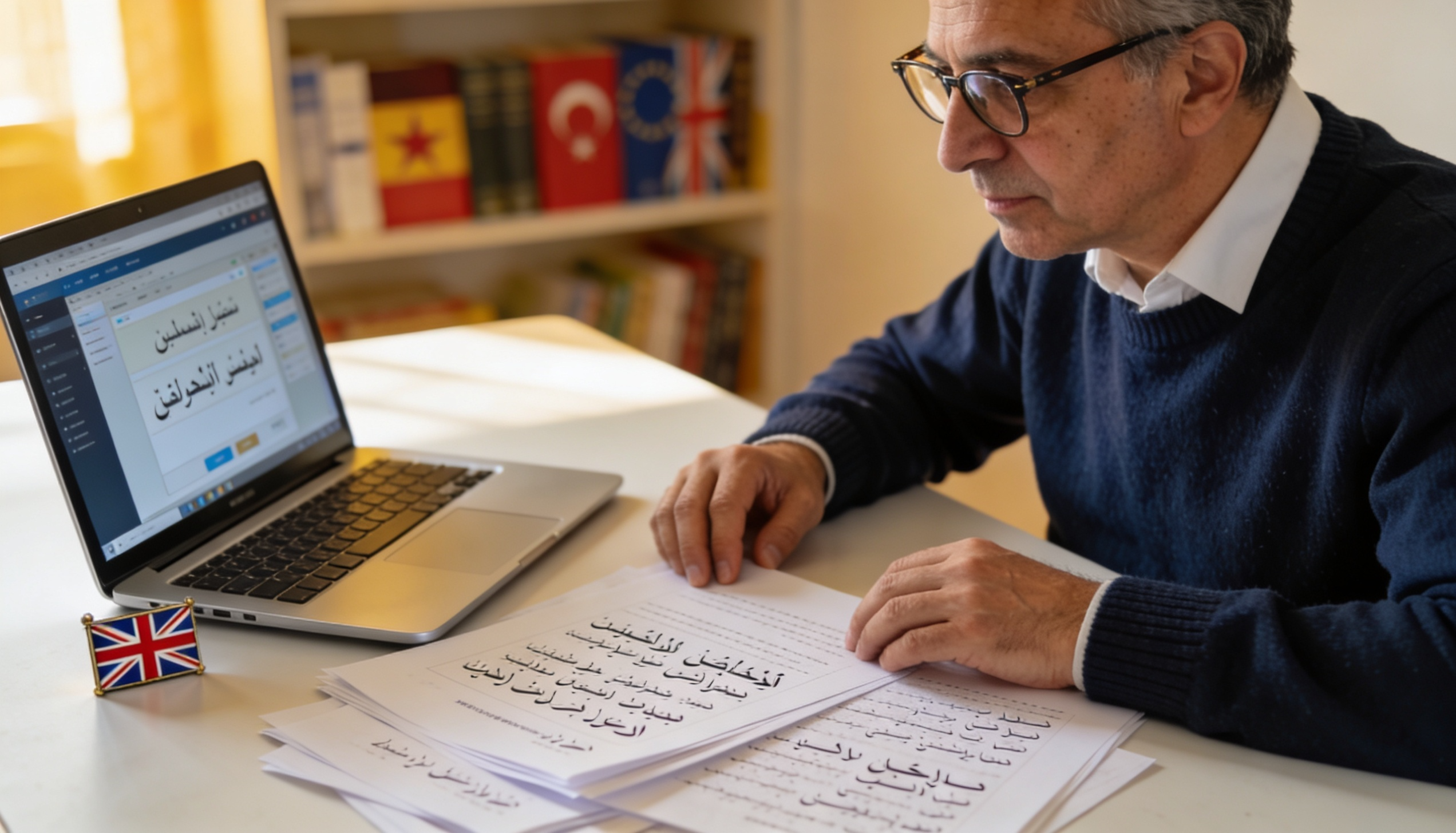
Understanding Turkish Certified Translation
Turkish certified translation means translating a document from Turkish into English, or vice versa, and supplying a signed certification statement when the receiving organisation requires one. Certification records responsibility for the translation’s accuracy and completeness; it does not create universal legal recognition.
The importance of certified translations cannot be overstated, particularly in legal contexts. For instance, when individuals are involved in legal proceedings, such as court cases or immigration applications, they often need to present documents that are not in English. These documents may include contracts, birth certificates, marriage certificates, or academic transcripts. In such cases, a certified translation ensures that the content is understood correctly by all parties involved, thereby preventing misunderstandings that could lead to legal complications.
Government bodies, universities, courts and other organisations may request certified translations when documents are not in the language they require. For immigration applications, the documents and certification details depend on the route, so applicants should follow the current instructions for their specific application.
In summary, Turkish certified translation provides an accurate translation together with certification details when a recipient requests them. Acceptance is determined by the organisation receiving the document.
The Process of Turkish Certified Translation in the UK
Obtaining a Turkish certified translation usually involves reviewing the document, confirming the intended use, translating the content and preparing any certification details requested by the receiving organisation.
- Document Submission: The first step involves submitting the original document that requires translation. This can be done via email or in person, depending on the translation service provider.
- Assessment and Quotation: Once the document is received, the translation service will assess its complexity and provide a quotation. This quotation will typically outline the cost, estimated turnaround time, and any additional requirements.
- Translation: After the quotation is approved, a translator competent in Turkish and the target language prepares the translation using appropriate terminology for the document type.
- Certification: Upon completion of the translation, the translator will prepare a certification statement. This statement confirms that the translation is accurate and complete, and it is typically signed and stamped by the translator or the translation agency.
- Delivery: The final step is the delivery of the certified translation to the client. This can be done electronically or through postal services, depending on the client’s preference.
Key players involved in this process include certified translators, translation agencies, and clients. Certified translators are responsible for ensuring the accuracy of the translation, while translation agencies often handle the administrative aspects, such as client communication and document management. Clients play a crucial role in providing the necessary documents and information to facilitate the translation process.
Understanding the process helps individuals and businesses provide accurate Turkish translations in the format requested by the organisation that will receive them.
What to Check for Turkish Certified Translation
There is no single certification rule used by every UK organisation. Check the receiving body’s instructions for the accuracy statement, translator details, formatting and any additional formalities before ordering.
Translator experience: The provider should be competent in Turkish and the target language and, where relevant, familiar with the subject matter. Professional qualifications or memberships can be useful indicators of experience, but they are not universally required for every UK submission.
Documentation Needed: The documentation required for certified translations may vary depending on the nature of the documents being translated. Generally, clients must provide the original document along with any additional information that may assist the translator in understanding the context. This can include:
- The original document in Turkish.
- Any specific formatting requirements for the translation.
- Instructions regarding the intended use of the translation (e.g., for court, immigration, etc.).
Additionally, clients may need to provide identification or proof of their relationship to the documents being translated, especially in cases involving sensitive information such as birth or marriage certificates. This helps ensure that the translation process is conducted ethically and legally.
In conclusion, confirm the recipient’s current requirements and prepare the translation and certification statement to match them.
Common Uses of Turkish Certified Translation
Turkish certified translation is utilized in various contexts, primarily where accuracy and legal recognition are essential. Some of the most common uses include:
- Legal Documents: Many legal proceedings require certified translations of documents such as contracts, court orders, and legal notices. These translations ensure that all parties involved understand the legal implications of the documents.
- Academic Transcripts: Students applying for admission to universities in the UK may need to submit certified translations of their academic transcripts. This ensures that educational qualifications are accurately represented and recognized by the institution.
- Immigration Papers: Individuals applying for visas or residency in the UK often need to provide certified translations of personal documents, including birth certificates, marriage certificates, and police clearance certificates. These translations are crucial for verifying an applicant’s identity and background.
In summary, the common uses of Turkish certified translation encompass a range of legal, academic, and immigration contexts, highlighting its importance in ensuring clear communication and compliance with legal requirements.
Choosing the Right Service for Turkish Certified Translation
Selecting the right Turkish translation service means checking language competence, document experience and whether the provider can prepare the certification format requested by your recipient.
- Qualifications and Experience: Look for a translation service that employs qualified and experienced translators. Check their credentials and ensure they have expertise in the specific type of documents you need translated.
- Reputation: Research the reputation of the translation service. Read reviews and testimonials from previous clients to gauge their reliability and quality of service.
- Certification process: Confirm that the provider can supply the signed statement and identifying details requested by the organisation receiving the document.
- Turnaround Time: Discuss the estimated turnaround time for your translation. Depending on the complexity of the documents, some services may offer expedited options for urgent requests.
- Cost: Obtain quotes from multiple translation services to compare pricing. Be cautious of prices that seem unusually low, as they may indicate lower quality or lack of certification.
Additionally, consider asking potential service providers the following questions:
- What qualifications do your translators hold?
- Can you provide examples of similar projects you have completed?
- How do you handle revisions or disputes regarding the translation?
- What is your policy on confidentiality and data protection?
By carefully evaluating these factors and asking the right questions, you can choose a translation service that meets your needs and ensures the accuracy and legality of your Turkish certified translations.
Cost Factors for Turkish Certified Translation
The cost of Turkish certified translation can vary based on several factors. Understanding these factors can help you budget effectively for your translation needs.
Pricing structures: Providers may charge by document, page, word count or project complexity. Pricing also depends on terminology, formatting, certification, urgency and delivery requirements, so request a quote from the actual file.
Complexity Effects: The complexity of the document significantly affects the cost. For instance, legal documents that require specialized knowledge may incur higher fees than standard documents. Additionally, if the document contains technical jargon or requires extensive research, the translation may take longer and thus cost more.
Furthermore, additional services such as notarization or expedited processing may also increase the overall cost. It is advisable to discuss all potential costs upfront with the translation service to avoid surprises later on.
In summary, understanding the cost factors associated with Turkish certified translation can help you make informed decisions and ensure that you receive quality service within your budget.
Frequently Asked Questions about Turkish Certified Translation
What is Turkish certified translation?
A Turkish certified translation is a Turkish-to-English or English-to-Turkish translation supplied with a signed certification statement when the receiving organisation requires one.
What are the requirements for Turkish certified translation in the UK?
The requirements depend on the receiving organisation. A signed accuracy statement is common, while specific credentials, formatting, stamps or notarisation may or may not be required.
How long does it take to get a Turkish certified translation?
Timing depends on document length, legibility, terminology, formatting and certification requirements. Confirm it after the complete file has been reviewed.
Where is Turkish certified translation commonly used?
In legal, academic, and immigration contexts.
Can I use a non-certified translation for official purposes?
It depends on the recipient. If the organisation requires certification, submit a translation prepared to its stated requirements.