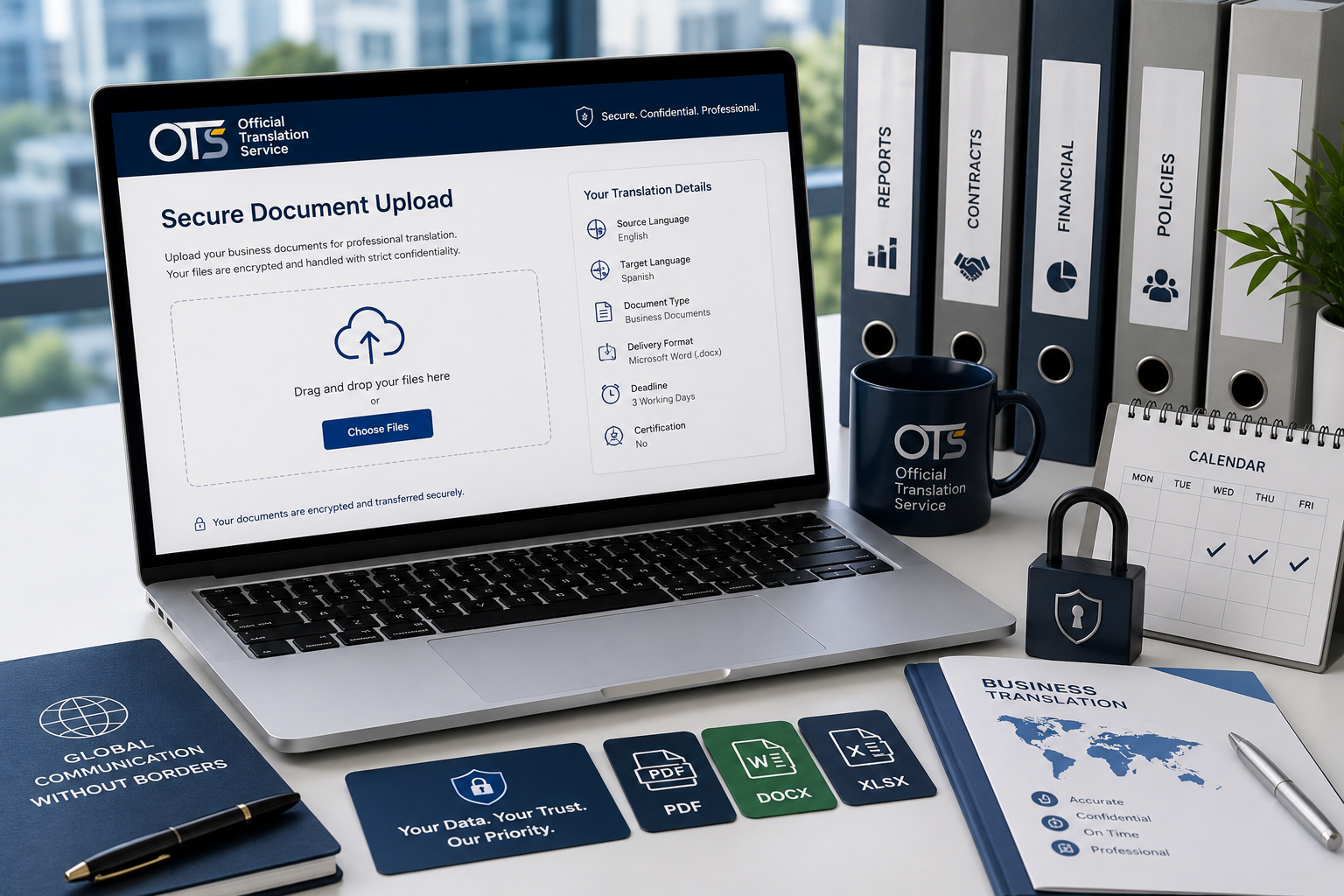
Company and corporate documents
Company profiles, reports, business plans, proposals, board materials and corporate records.

Clear, professional translations for company reports, contracts, proposals, presentations, policies, marketing materials, financial records and everyday corporate communications.
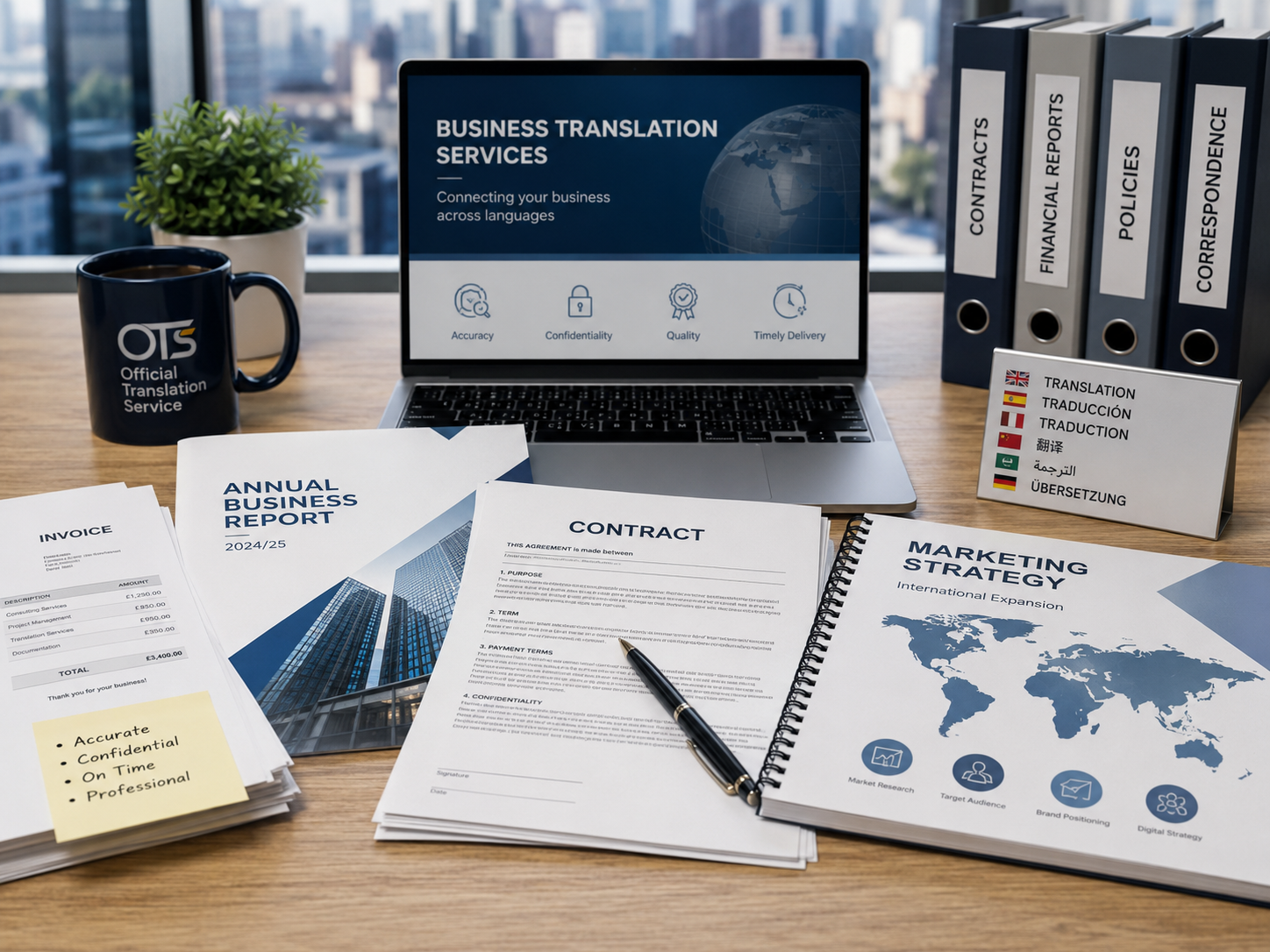
Business translation converts company content into another language while preserving its meaning, professional tone, commercial context and intended function.
The service can cover anything from a short email or invoice to a complete contract pack, company report, internal policy or multilingual presentation.
A useful translation should do more than replace individual words. Terminology, figures, names, formatting and tone must suit the document’s purpose and intended reader.
The files, languages, subject, audience, formatting and delivery requirements are reviewed first.
Company terms and wording are handled according to the document’s commercial or internal purpose.
Headings, tables, lists and presentation structure can be retained where the source format allows.
Certified translation and printed delivery can be arranged when requested by an official recipient.
The correct approach depends on the content, purpose, audience, destination and requested file format.
Company profiles, reports, business plans, proposals, board materials and corporate records.
Commercial contracts, supplier agreements, terms, partnership documents and service agreements.
Invoices, financial reports, statements, purchasing records and administrative correspondence.
Brochures, website copy, newsletters, campaigns, product information and customer communications.
Company policies, procedures, staff communication, training materials and workplace guidance.
Professional correspondence, pitch materials, meeting documents and presentation slides.
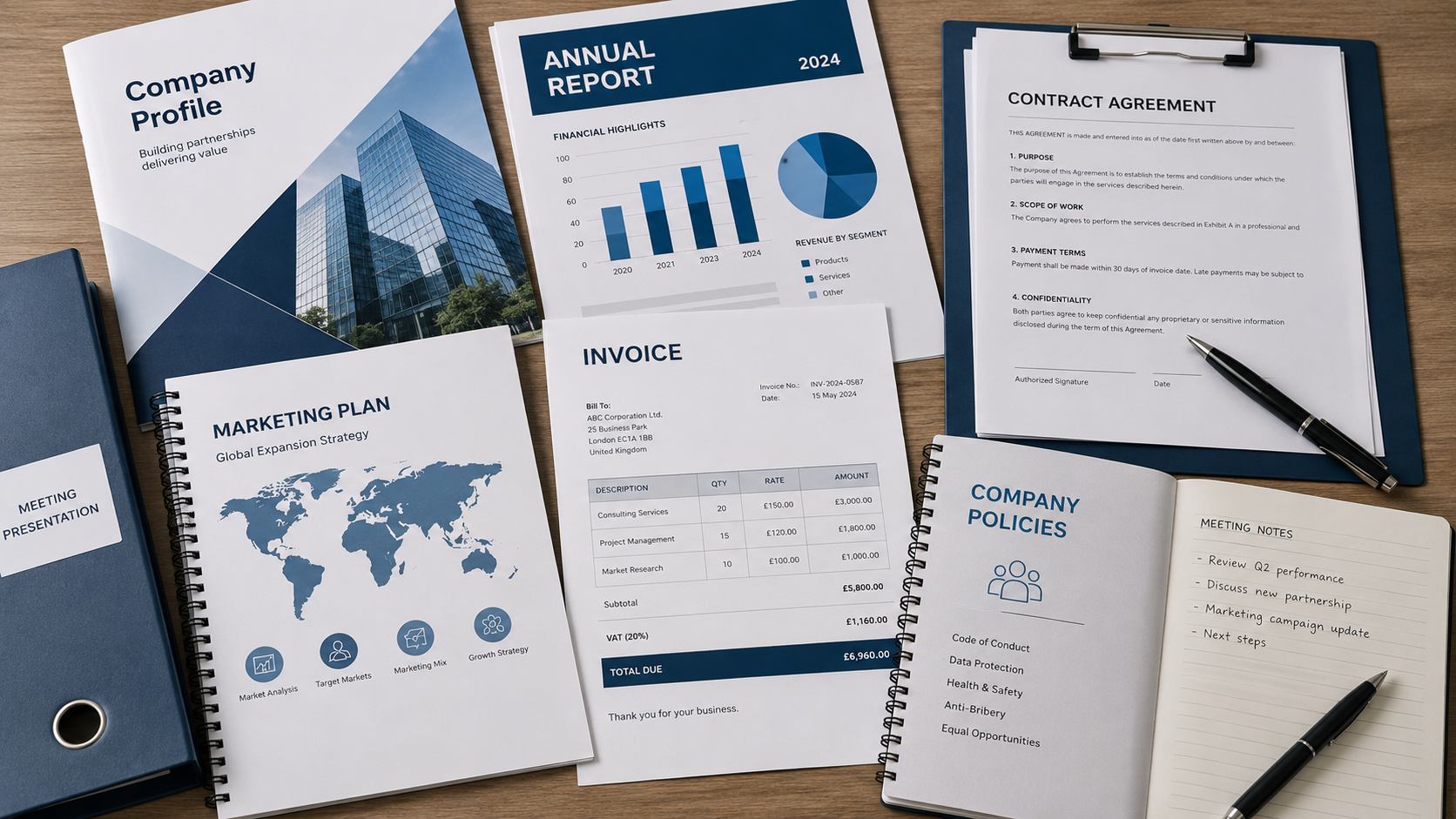
Business translation supports communication whenever important information must remain clear and professionally presented across languages.
Translate proposals, presentations, service information and correspondence for prospective or existing clients.
Prepare agreements, specifications, purchasing information and operational documents.
Translate company profiles, brochures, websites and marketing materials for a new language audience.
Provide consistent policies, instructions, training materials and internal communication.
Translate contracts, terms, proposals and supporting correspondence for review by the relevant parties.
Arrange certification when a bank, solicitor, court, government department or institution specifically requests it.
Send the files and explain how the translated material will be used. The project can then be reviewed before the price, schedule and format are confirmed.
Send a clear scan, PDF, image or editable business file through the online order page.
Include the languages, audience, deadline, format and any certification instructions.
Terminology, tone, names, figures, structure and consistency are reviewed.
The translation is delivered in the agreed digital or printed format.
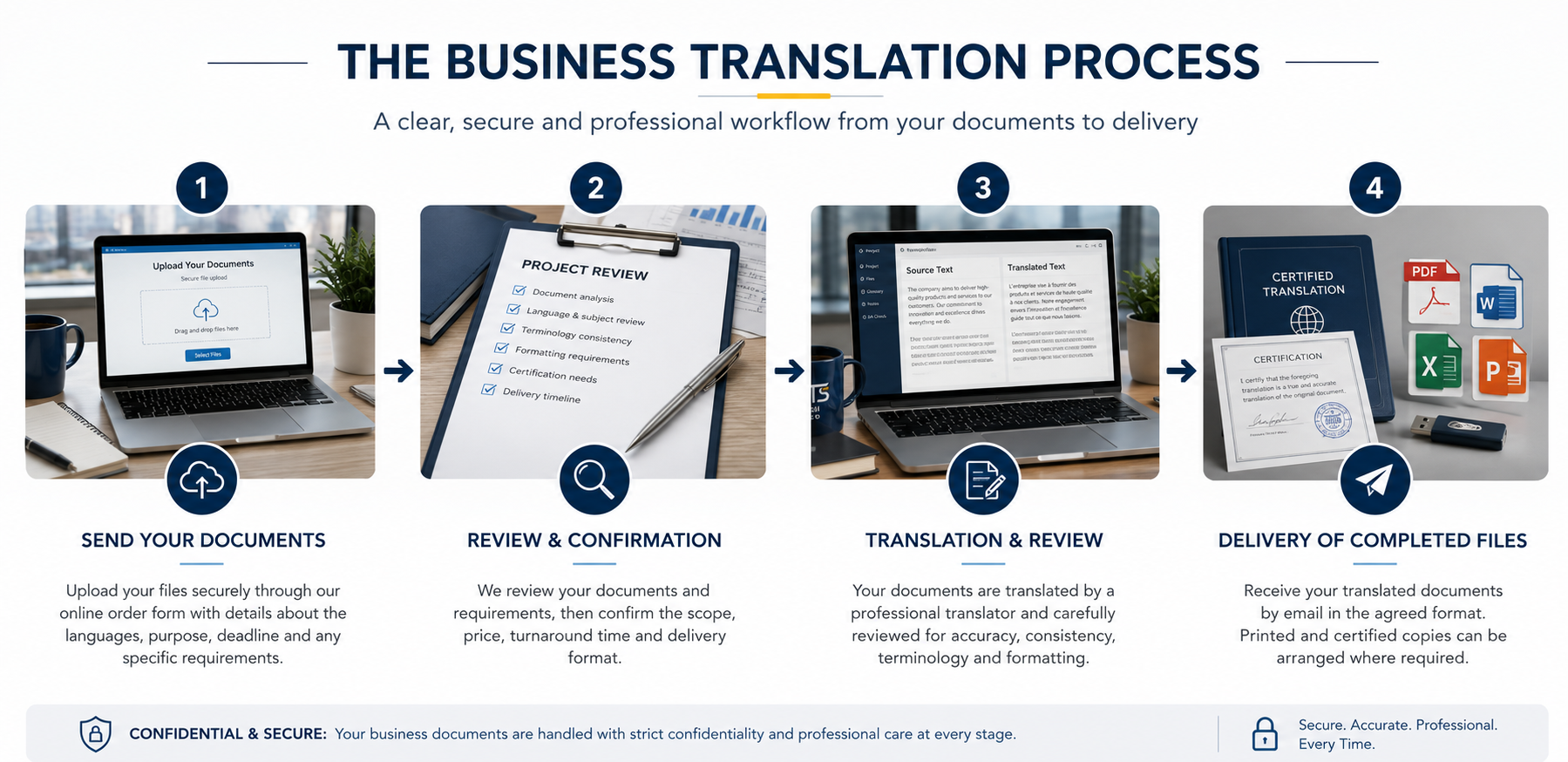
A project can be planned more accurately when the files, audience, purpose, terminology and required format are clear from the beginning.
You do not need to redesign the files before sending them. Complete editable files or clear copies are normally more useful than screenshots with missing edges, notes or tables.
The audience and purpose affect tone, formatting, terminology and whether certification is required.
Customer-facing content should communicate the same purpose naturally while maintaining company terminology and an appropriate professional tone.
Internal documents require clear and consistent language so that employees and teams receive the same operational information.
Certification may be needed when a translated business document is submitted to a solicitor, bank, court, government department or corporate institution.
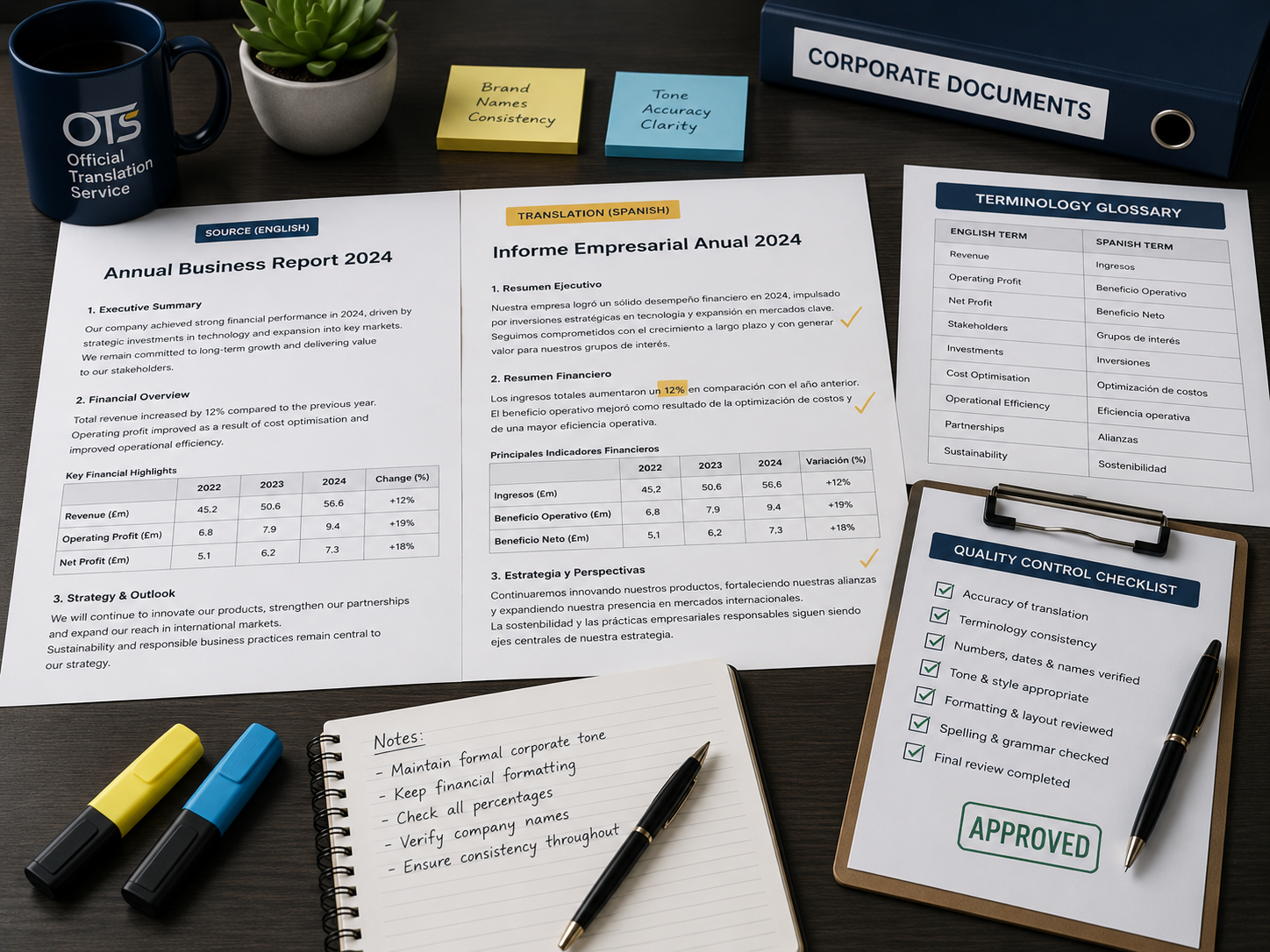
Business documents often contain repeated terms, figures, product references and formal wording that must remain consistent across the complete file set.
Company, commercial and industry terms are kept consistent across related documents.
Proper names, reference numbers, percentages and financial figures receive careful attention.
Wording is shaped for formal, internal, contractual, promotional or customer use.
Headings, tables, lists and slide structure can be followed where the file format allows.
| Content type | Main translation priority | Helpful supporting material |
|---|---|---|
| Contracts and agreements | Precise terminology, defined terms and consistent clauses | Related agreements, definitions or submission instructions |
| Reports and financial documents | Figures, headings, tables, dates and formal presentation | Editable spreadsheets, reports or company terminology |
| Marketing materials | Meaning, tone, audience and natural customer-facing wording | Brand guidance, product names and campaign context |
| Policies and internal documents | Clarity, consistency and accurate procedural language | Related policies, abbreviations and internal terminology |
| Presentations | Concise wording, slide structure and visible formatting | Editable presentation, notes and reference files |
Some documents are translated only for internal or commercial communication. Others must be submitted formally to a bank, solicitor, court, government department or corporate institution.
Tell the team where the document will be submitted so the required certification and delivery arrangements can be reviewed before the order proceeds.
The price and delivery schedule are confirmed after the complete files, languages, format and project requirements have been reviewed.
The number of words, pages, slides and separate files affects the project scope.
Availability and scheduling depend partly on the source and target languages.
Contracts, financial content and specialist documents may require additional review.
Presentations, spreadsheets, tables and complex layouts can affect preparation time.
Standard and faster options depend on length, complexity and current availability.
Certification, printed copies or additional official requirements can change the service needed.
Delivery timing is confirmed after the complete files, languages, subject matter and formatting requirements are reviewed. Larger, specialist or multi-file projects may require additional time.
The service can be adapted to different commercial, operational and corporate requirements.
A company sends an agreement, schedules and supporting correspondence. Defined terms and repeated commercial language remain consistent across the files.
A presentation is translated while retaining slide order, headings, charts and concise wording that fits the available space.
Internal policies and instructions use consistent terminology so employees receive clear information across the complete document set.
Clear preparation can reduce unnecessary revisions and help the translation match its intended purpose.
Missing schedules, notes or attachments can leave important terms without enough context.
A client brochure, internal policy and formal submission require different tone and presentation.
Supply approved wording so products, departments and services remain consistent.
Mention certified, notarised or other formal requirements before translation begins.
Blurred text, cropped tables and missing page edges may prevent content from being read correctly.
Provide editable files and explain whether tables, slides, headings or other structures must be followed.
Answers about documents, certification, contracts, formatting, confidentiality, turnaround and pricing.
The service covers company reports, contracts, proposals, presentations, business plans, policies, emails, invoices, financial documents, marketing materials, administrative records and internal corporate communication.
Yes. Where a business document is being submitted formally, a certified translation can include a certification statement, company details, signature, stamp and date.
Yes. Contracts, agreements, terms and conditions, compliance documents and policies can be translated with attention to defined terms, repeated wording and commercial context.
Timing depends on the document length, languages, subject matter, file format and delivery requirements. The expected schedule is confirmed after the complete files are reviewed.
Where possible, headings, tables, bullet points and presentation structure can be followed. Editable source files are helpful when the final translation needs to match the original layout closely.
If your organisation has confidentiality, NDA or handling requirements, include them when submitting the files so those requirements can be reviewed before work begins.
Provide approved product names, glossaries, style guidance, abbreviations or previous translations with the source files so they can be reviewed as part of the project.
Include the required languages, intended use, audience, deadline, preferred format, terminology references and any certification or printed-copy instructions.
Upload the complete documents and explain the requirements. The files can then be reviewed so the price, service, turnaround and delivery format can be confirmed before work begins.
Upload the complete files and include the language, intended audience, deadline and preferred format. The appropriate service, price and expected delivery schedule can then be confirmed.