Understanding Power of Attorney
A Power of Attorney (POA) is a legal document that gives another person authority to act on someone’s behalf within the powers stated in the document. The legal framework and terminology differ across the UK, so the rules for England and Wales should not be treated as automatically applying in Scotland or Northern Ireland.
There are several types of Power of Attorney in the UK, each serving different purposes:
- General Power of Attorney: This allows the appointed person to make decisions on behalf of the individual in a wide range of matters, including financial transactions and legal agreements. It is often used when someone is abroad or unable to manage their affairs temporarily.
- Lasting Power of Attorney (LPA): This is a more specific type of POA that remains in effect even if the individual loses mental capacity. There are two types of LPA:
- Property and Financial Affairs LPA: This allows the appointed person to manage the individual’s financial matters, such as banking and property transactions.
- Health and Welfare LPA: This enables the appointed person to make decisions about the individual’s health care and welfare, including medical treatment and living arrangements.
- Enduring Power of Attorney (EPA): This type was replaced by the LPA but remains valid for those created before October 2007. It allows the appointed person to manage financial affairs but must be registered with the Court of Protection if the individual loses mental capacity.
Understanding the different types of Power of Attorney is crucial for individuals looking to ensure their affairs are managed according to their wishes, especially in situations where they may not be able to communicate those wishes themselves.
Importance of Power of Attorney Translation
Translating a Power of Attorney is essential, particularly for individuals who are non-native English speakers or who are dealing with legal matters across different jurisdictions. The legal implications of untranslated documents can be significant. An untranslated Power of Attorney may not be recognized by authorities or institutions in the UK or abroad, leading to potential legal disputes or complications in executing the intended powers.
There are several scenarios that necessitate the translation of a Power of Attorney:
- International Transactions: If an individual needs to appoint someone to manage their affairs in another country, the Power of Attorney must be translated into the relevant language to be recognized legally.
- Legal Proceedings: In cases where a Power of Attorney is required for court proceedings, having a certified translation ensures that all parties understand the document’s contents and the authority granted.
- Financial Institutions: Banks and financial institutions may require a translated Power of Attorney to process transactions or manage accounts for individuals who are not fluent in English.
- Healthcare Decisions: For individuals who may need to make healthcare decisions while in a foreign country, having a translated Health and Welfare LPA is crucial to ensure that their wishes are understood and respected.
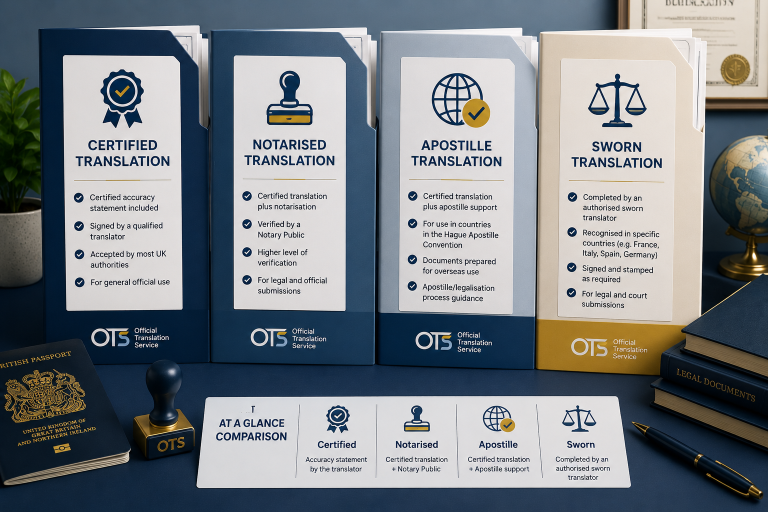
Translation may be needed when a solicitor, bank, court, authority or overseas recipient cannot use the original language. Whether a certified, notarised or legalised translation is required depends on that recipient and jurisdiction.
Power of Attorney Translation Requirements in the UK
There is no single UK-wide translation format that automatically makes every Power of Attorney acceptable. Start with the requirements of the solicitor, bank, court, authority or overseas body receiving the document. Common considerations include:
- Certification: If the recipient asks for a certified translation, include the accuracy statement and provider details it specifies.
- Accurate Representation of Legal Terms: Legal terminology can vary significantly between languages. A qualified translator must ensure that all legal terms in the Power of Attorney are accurately translated to reflect the original document’s intent and meaning.
- Formatting Requirements: The translated document should mirror the format of the original Power of Attorney. This includes maintaining the layout, headings, and any signatures or seals that may be present in the original document.
- Notarization (if required): In some cases, a notarized translation may be necessary. This involves a notary public verifying the identity of the translator and the authenticity of the translation. It is particularly important for documents that will be used in legal proceedings.
To initiate the translation process, individuals must provide the original Power of Attorney document along with any specific instructions regarding the translation. It is advisable to consult with a certified translation service that specializes in legal documents to ensure compliance with all requirements.
How to Get Your Power of Attorney Translated
Getting your Power of Attorney translated involves a straightforward process, but it is essential to follow each step carefully to ensure the translation meets all legal requirements. Here’s how to initiate the translation process:
- Choose a Certified Translation Service: Look for a translation service that specializes in legal documents and has experience with Power of Attorney translations. Check for accreditations and reviews to ensure reliability.
- Submit Your Document: Provide the original Power of Attorney document to the translation service. You may also need to include any specific instructions or requirements for the translation.
- Request a Quote: Before proceeding, ask for a detailed quote that outlines the costs and estimated turnaround time for the translation. This will help you budget accordingly.
- Review the Translation: Once the translation is complete, review it carefully to ensure accuracy. If possible, have a legal professional review the document to confirm that it meets all necessary legal standards.
- Obtain Certification: Ensure that the translation is certified by the translator. This certification is crucial for the legal validity of the document.
- Notarization (if necessary): If required, arrange for the notarization of the translation to further validate its authenticity.
By following these steps, you can ensure that your Power of Attorney is accurately translated and legally recognized, allowing for seamless management of your affairs.
The Certified Translation Process for Power of Attorney
Certified translation is a specialized process that ensures legal documents, such as a Power of Attorney, are accurately translated and recognized by authorities. Here’s an overview of what certified translation entails:
What is Certified Translation? Certified translation is performed by a qualified translator who provides a signed statement attesting to the accuracy and completeness of the translation. This certification is essential for legal documents, as it assures the receiving party that the translation is an accurate representation of the original document.
How certification affects use: Certification identifies responsibility for the translation and may satisfy a recipient’s document requirements. It does not itself determine whether the underlying Power of Attorney is legally valid or effective; that depends on the governing law and the organisation using it.
To obtain a certified translation of your Power of Attorney, it is crucial to engage a professional translation service that employs qualified translators with expertise in legal terminology. This ensures that the translation is not only accurate but also adheres to the specific legal standards required in the UK.
Common Challenges in Power of Attorney Translation
Translating a Power of Attorney can present several challenges, particularly due to the complexity of legal terminology and language-specific nuances. Here are some common challenges faced during the translation process:
- Language-Specific Nuances: Different languages have unique expressions and idioms that may not have direct equivalents in English. Translators must navigate these nuances to ensure that the meaning is preserved while also being legally accurate.
- Legal Terminology Issues: Legal terms can vary significantly between jurisdictions. A term that is commonly understood in one legal system may not have the same meaning in another. Translators must have a deep understanding of legal concepts in both the source and target languages to avoid misinterpretations.
- Maintaining Original Intent: It is crucial to preserve the original intent of the document. This requires the translator to be not only linguistically skilled but also knowledgeable about the legal implications of the terms used in the Power of Attorney.
- Formatting Challenges: Ensuring that the translated document mirrors the original in terms of format and layout can be challenging, especially when dealing with complex legal documents that include signatures, seals, and other formal elements.
To overcome these challenges, it is advisable to work with a certified translation service that specializes in legal documents and has a proven track record of handling Power of Attorney translations. This ensures that the translation is accurate, legally valid, and meets all necessary requirements.
Cost Factors for Power of Attorney Translation
The cost of translating a Power of Attorney can vary widely based on several factors. Understanding these factors can help individuals budget effectively for their translation needs. Here are the key cost factors to consider:
- Complexity of the Document: The more complex the Power of Attorney, the higher the translation cost may be. Documents that include specialized legal terminology or require extensive formatting may take longer to translate, increasing the overall cost.
- Language Pair: The cost of translation can also depend on the languages involved. Common language pairs may be less expensive than rare or complex language combinations, which may require specialized translators.
- Turnaround Time: If you need the translation completed quickly, rush fees may apply. Standard turnaround times are generally more cost-effective, while expedited services will incur additional charges.
- Certification and Notarization: If you require a certified translation or notarization, these services may add to the overall cost. Be sure to inquire about these fees when requesting a quote.
Pricing depends on document length, language pair, legal terminology, formatting and whether certification, notarisation or legalisation is required. Check the published translation pricing or send the complete document for review.
Choosing the Right Translation Service
Selecting the right translation service is crucial for ensuring that your Power of Attorney is accurately translated and legally valid. Here are some key considerations when choosing a translation service:
- Specialization in Legal Translation: Look for a translation service that specializes in legal documents, particularly Power of Attorney translations. This ensures that the translators are familiar with legal terminology and requirements.
- Qualifications and Certifications: Check the qualifications and certifications of the translators. They should be accredited professionals with experience in translating legal documents.
- Client Reviews and Testimonials: Research client reviews and testimonials to gauge the quality of the service. Positive feedback from previous clients can provide insight into the reliability and accuracy of the translation service.
- Transparent Pricing: Choose a service that offers transparent pricing with no hidden fees. A detailed quote should outline all costs associated with the translation, including certification and notarization if required.
- Customer Support: A responsive customer support team is essential for addressing any questions or concerns during the translation process. Ensure that the service provides adequate support throughout your engagement.
By considering these factors, individuals can make an informed decision when selecting a translation service, ensuring that their Power of Attorney is translated accurately and meets all legal requirements.
Conclusion and Next Steps
Translating a Power of Attorney is a critical step for individuals looking to manage their legal and financial affairs, especially in cross-border situations. Understanding the importance of accurate translation, the requirements involved, and the challenges that may arise can help individuals navigate this process effectively.
In summary, the key points to remember include:
- The definition and types of Power of Attorney in the UK.
- The legal implications of untranslated documents and scenarios requiring translation.
- The necessary requirements for Power of Attorney translation in the UK.
- The steps to initiate the translation process and the certified translation process.
- Common challenges in translation and factors influencing costs.
- How to choose the right translation service for your needs.
For those looking to get their Power of Attorney translated, it is advisable to take action promptly. Contact a certified translation service today to discuss your needs and ensure that your Power of Attorney is accurately translated and legally recognized. Don’t leave your legal affairs to chance; ensure that your intentions are clearly communicated and upheld.
Frequently Asked Questions
What is a Power of Attorney?
A legal document allowing one person to act on behalf of another.
Why is Power of Attorney translation necessary?
It may be needed so the receiving organisation can understand the document. Translation does not itself determine the Power of Attorney’s legal validity.
How can I get my Power of Attorney translated?
Contact a certified translation service for assistance.
What are the requirements for Power of Attorney translation in the UK?
Requirements vary by recipient and jurisdiction; accurate legal terminology is essential, and certification or notarisation may be requested.
What is the cost of Power of Attorney translation?
Varies based on complexity and service provider.
For document-specific support, see our Power of Attorney translation service or send the document and recipient instructions for review.