Understanding Insurance Translation
Insurance translation refers to the process of translating documents related to insurance policies, claims, and other associated materials from one language to another. This specialized form of translation is crucial in ensuring that all parties involved in an insurance transaction fully understand the terms, conditions, and obligations outlined in the documents. In the UK, where a diverse population speaks multiple languages, the need for accurate insurance translation has become increasingly important.
The significance of insurance translation in the UK context cannot be overstated. With a growing number of international residents and expatriates, insurance companies are frequently required to provide documents in various languages to cater to their clients’ needs. This ensures that non-English speakers can comprehend their insurance policies, making informed decisions regarding coverage and claims. Moreover, accurate translations are essential for compliance with legal requirements and to avoid potential disputes arising from misunderstandings. For instance, a misinterpreted clause in a policy could lead to significant financial losses for both the insurer and the insured.
Furthermore, the UK insurance market is highly regulated, with strict guidelines governing how insurance products are marketed and sold. This regulatory environment necessitates that all documentation, including translations, adhere to specific standards to maintain transparency and protect consumer rights. As such, insurance translation plays a vital role in facilitating communication between insurers and clients, ensuring that everyone is on the same page regarding their rights and responsibilities.
Why Certified Translation Matters
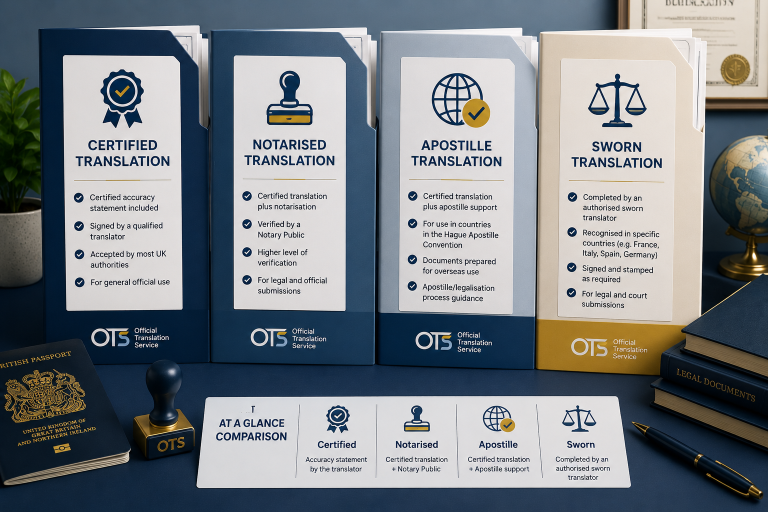
Certification can be relevant for insurance documents when a receiving insurer, court, regulator or other organisation asks for a signed statement confirming the translation’s accuracy. It is not a universal requirement for every insurance document, so the intended use should be confirmed before translation begins.
A poorly prepared translation can cause questions or delays if key policy terms, exclusions, claim details or financial figures are unclear. For a claim, dispute or formal submission, check what evidence format the insurer, solicitor or court expects before ordering the translation.
Trust and credibility are paramount in the insurance industry. Clients are more likely to trust insurers who provide certified translations, as this demonstrates a commitment to transparency and professionalism. Certified translations assure clients that their documents have been accurately translated, reducing the likelihood of misunderstandings and fostering a more positive relationship between insurers and policyholders. Moreover, the use of certified translations can enhance the reputation of insurance companies, positioning them as reliable and trustworthy providers in a competitive market.
Types of Insurance Documents Requiring Translation
There are various types of insurance documents that may require translation, depending on the specific needs of clients and the nature of the insurance products involved. Some of the most common documents include:
- Insurance Policies: These documents outline the terms and conditions of the insurance coverage, including premiums, deductibles, and exclusions. Accurate translation is essential to ensure that policyholders understand their rights and obligations.
- Claims Forms: When policyholders file claims, they must complete specific forms detailing the incident and the damages incurred. Translating these forms accurately is critical for the claims process to proceed smoothly.
- Terms and Conditions: Insurance companies often provide detailed terms and conditions that accompany their policies. These documents must be translated to ensure that clients are fully informed about their coverage.
- Renewal Notices: Clients receive renewal notices when their policies are due for renewal. Translating these notices helps clients understand any changes in their coverage or premiums.
- Explanatory Documents: Insurers may provide additional documents explaining specific aspects of the policy, such as coverage limits or claims procedures. These documents must be translated to ensure clarity.
Each of these documents plays a vital role in the insurance process, and ensuring their accurate translation is essential for effective communication between insurers and clients.
Insurance Translation Document Requirements in the UK
In the UK, there are specific requirements that must be met for translated insurance documents to be considered valid. Understanding these requirements is crucial for both insurers and clients to ensure compliance and avoid potential issues. Key requirements include:
- Accuracy: Translations must be precise and convey the same meaning as the original documents. This is particularly important for legal and financial terms that may have specific implications.
- Certification where required: If the receiving organisation asks for certification, the translation should include the relevant accuracy statement and provider details.
- Recipient requirements: Regulatory, contractual and evidential requirements vary by document and use. Confirm the instructions of the insurer, court, solicitor or other receiving body.
- Formatting Consistency: Translations should maintain the formatting of the original documents to ensure that all information is easily accessible and understandable. This includes preserving headings, bullet points, and other structural elements.
By adhering to these requirements, insurers can ensure that their translated documents are accepted and recognized by clients and regulatory bodies alike, thereby facilitating smoother transactions and reducing the risk of disputes.
The Process of Insurance Document Translation
The process of translating insurance documents involves several key steps to ensure accuracy and compliance with industry standards. These steps typically include:
- Initial Assessment: The translation service provider assesses the documents to determine the scope of work, including the languages involved and the complexity of the content.
- Translator Selection: A qualified translator with expertise in insurance terminology and relevant language pairs is selected for the project. This ensures that the translation is not only accurate but also contextually appropriate.
- Translation: The translator begins the translation process, carefully converting the text while maintaining the original meaning and intent. This step may involve researching specific terms or phrases to ensure accuracy.
- Editing and Proofreading: Once the initial translation is complete, the document undergoes a thorough editing and proofreading process. This step is crucial for identifying and correcting any errors or inconsistencies.
- Certification: After the translation has been finalized, the translator provides a certification statement attesting to the accuracy of the translation. This certification is essential for legal and regulatory purposes.
- Delivery: The completed translation is delivered to the client in the required format, ensuring that all specifications are met.
Best practices for accuracy and compliance include maintaining open communication between the translator and the client, utilizing translation memory tools for consistency, and conducting regular quality checks throughout the process. By following these steps, translation service providers can ensure that insurance documents are translated accurately and efficiently.
Choosing the Right Translation Service
When selecting a translation service for insurance documents, it is essential to consider several factors to ensure that the chosen provider meets the specific needs of the client. Key considerations include:
- Experience in Insurance Translation: Look for a translation service that specializes in insurance translation and has a proven track record in the industry. This experience ensures that the translators are familiar with the terminology and nuances of insurance documents.
- Relevant expertise: Check that the provider has experience with insurance terminology, financial figures, policy wording and the language pair involved.
- Client Reviews and Testimonials: Research client reviews and testimonials to gauge the quality of service provided by the translation company. Positive feedback from previous clients can indicate reliability and professionalism.
- Turnaround Times: Consider the turnaround times offered by the translation service. Timely delivery is crucial in the insurance industry, where delays can lead to complications in claims processing.
- Customer Support: Evaluate the level of customer support provided by the translation service. A responsive and helpful support team can make the translation process smoother and more efficient.
By taking these factors into account, clients can ensure that they choose a translation service that meets their needs and provides high-quality translations for their insurance documents.
Common Challenges in Insurance Translation
Insurance translation presents several challenges that must be addressed to ensure accurate and effective communication. Some of the most common challenges include:
- Language Nuances: Different languages often have unique expressions and idioms that may not have direct equivalents in other languages. This can lead to misunderstandings if not handled carefully. For instance, legal terms may have specific meanings in one language that do not translate directly into another.
- Legal Terminology: Insurance documents often contain complex legal terminology that requires a deep understanding of both the source and target languages. Translators must be well-versed in legal concepts to ensure that the translations are accurate and compliant with regulations.
- Cultural Considerations: Cultural differences can impact how insurance concepts are understood and perceived. For example, certain terms may carry different connotations in different cultures, leading to potential misunderstandings if not addressed appropriately.
- Document Formatting: Maintaining the formatting of the original documents during translation is essential for clarity and ease of understanding. However, different languages may require different formatting styles, which can pose challenges for translators.
To overcome these challenges, it is essential to work with experienced translators who are familiar with the insurance industry and the specific languages involved. Additionally, utilizing translation memory tools can help maintain consistency and accuracy across multiple documents.
The translation process involved extensive collaboration between the insurance company and the translation team, allowing for clarification of specific terms and concepts. As a result, the translated documents were well-received by clients, leading to increased trust and satisfaction. The insurance company reported a significant reduction in claims disputes related to misunderstandings of policy terms, demonstrating the importance of accurate translations.
Another example involved a multinational insurance provider that needed to translate claims forms for clients in multiple languages. By implementing a standardized translation process and utilizing translation memory tools, the company was able to streamline its translation efforts, ensuring consistency across all documents. This approach not only improved the accuracy of translations but also reduced turnaround times, allowing clients to receive prompt assistance with their claims.
These case studies highlight the importance of collaboration, expertise, and the use of technology in achieving successful insurance translations. By learning from these examples, other insurance providers can enhance their translation processes and improve client satisfaction.
Future Trends in Insurance Translation
The landscape of insurance translation is continually evolving, driven by technological advancements and changing client needs. Some key trends shaping the future of insurance translation include:
- Technological Advancements: The rise of artificial intelligence (AI) and machine translation is transforming the translation industry. While human translators remain essential for ensuring accuracy and cultural relevance, AI tools can assist in speeding up the translation process and improving efficiency.
- Growing Importance of Multilingual Services: As the global population becomes increasingly mobile, the demand for multilingual insurance services is on the rise. Insurance companies must adapt by offering translations in multiple languages to cater to diverse client bases.
- Integration of Translation Memory Tools: The use of translation memory tools is becoming more prevalent in the insurance industry, allowing translators to maintain consistency across documents and reduce turnaround times. These tools store previously translated segments, enabling translators to reuse them in future projects.
- Focus on Client-Centric Services: Insurance companies are increasingly prioritizing client experience, which includes providing clear and accessible translations of insurance documents. This focus on client-centric services will drive demand for high-quality translations that meet the needs of diverse populations.
By staying abreast of these trends, insurance providers can enhance their translation processes, improve client satisfaction, and remain competitive in a rapidly changing market.
Frequently Asked Questions
What is insurance translation?
Insurance translation involves the translation of insurance-related documents to ensure legal compliance and clarity for all parties involved.
Why is certified translation necessary for insurance?
Certification may be needed where the recipient requires a signed accuracy statement. The correct route depends on the insurer, court, solicitor or other organisation receiving the document.
What documents typically require translation in insurance?
Common documents that require translation in insurance include insurance policies, claims forms, and terms and conditions.
What are the requirements for insurance document translation in the UK?
Requirements depend on the intended use. Accuracy and completeness are essential, while certification and formatting should follow the receiving organisation’s instructions.
How can I choose a reliable translation service for insurance documents?
Look for certifications, check experience in insurance translation, and read reviews and testimonials to find a reliable service.
Translation for Insurance Coverage and Claims
Insurance translation can cover policy schedules, certificates of insurance, coverage wording, exclusions, claim forms, loss reports, correspondence and supporting evidence. For a claim or coverage review, send the full relevant document rather than isolated extracts so defined terms and references can be translated consistently.
For specialist insurance documents, see our insurance translation service or send the file through the online order process.