Understanding the Need for Hebrew to English Translation in the UK
Hebrew to English translation may be needed for immigration, legal, academic, financial, medical, employment or personal documents used in the UK. For official submissions, translate the documents the receiving organisation actually requires and follow its current certification instructions rather than assuming every Hebrew document must be translated.
Common uses include immigration applications, legal proceedings and educational admissions. The document set varies: a visa route may require particular civil, financial or academic evidence; a university may request transcripts or certificates; a court or solicitor may require specific legal documents. Translation should preserve the source meaning accurately without implying that the translation itself determines legal validity.
For UK immigration, required supporting documents that are not in English or Welsh should follow the translation and independent-verification requirements of the relevant route. Universities, courts, employers and other recipients may use different rules.
Types of Documents That Require Hebrew to English Translation
Several types of documents necessitate Hebrew to English translation for official use in the UK. Understanding the specific requirements for each type can help streamline the translation process and ensure compliance with UK regulations.
- Legal Documents: These include contracts, affidavits, court orders, and any other legal paperwork. Accurate translation is critical, as even minor errors can lead to significant legal ramifications. For example, a mistranslated clause in a contract could alter the agreement’s terms, potentially leading to disputes.
- Academic Transcripts: Students applying for universities or colleges in the UK must provide translated academic transcripts. These documents must accurately reflect the courses taken, grades received, and any qualifications obtained. Institutions often require certified translations to ensure authenticity and accuracy, which can be crucial for admission decisions.
- Personal documents: Birth, marriage, divorce and death certificates may require translation when they are relevant evidence for an immigration, citizenship, probate or other official process.
In addition to these categories, other documents such as financial statements, medical records, and professional qualifications may also require translation. Each of these documents serves a unique purpose and must be translated with care to maintain their integrity and legal standing in the UK.
The Hebrew Document Translation Guide
Translating Hebrew documents into English involves a systematic approach to ensure accuracy and compliance with UK regulations. Here is a step-by-step guide to navigating the translation process effectively:
- Prepare Your Documents: Start by gathering all documents that require translation. Ensure that they are complete, legible, and in good condition. If the documents are not in a digital format, consider scanning them to create high-quality images for easier handling.
- Choose the Right Translation Service: Selecting a reputable translation service is crucial. Look for providers that specialize in Hebrew to English translations and have experience with the specific type of documents you need translated. Check for certifications, client reviews, and turnaround times to find a service that meets your needs.
- Submit Your Documents for Translation: Once you have selected a translation service, submit your documents along with any specific instructions regarding formatting or terminology preferences. Be clear about the purpose of the translation to ensure that the translator understands the context.
- Review the Translated Documents: After receiving the translated documents, review them carefully. Check for accuracy, clarity, and completeness. If possible, have a native speaker or someone familiar with both languages review the translation to catch any potential errors.
- Request Revisions if Necessary: If you find any discrepancies or areas that require clarification, communicate with the translation service to request revisions. Most reputable services will accommodate reasonable requests for adjustments.
By following these steps, you can ensure that your Hebrew documents are accurately translated into English, meeting the necessary legal and official requirements in the UK.
The Hebrew Certified Translation Process
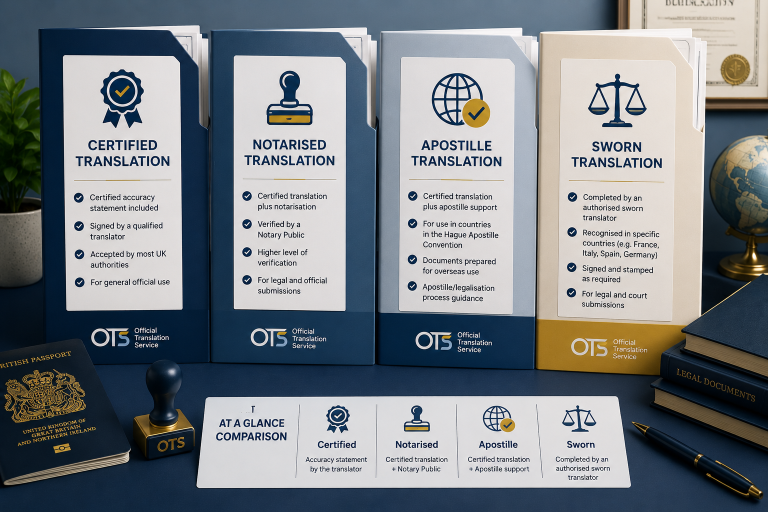
A certified translation is supplied with a signed statement confirming accuracy and completeness. Certification records responsibility for the translation; it does not guarantee authenticity of the source document or automatic acceptance by a UK authority.
- Understanding Certified Translation: A certified translation is one that comes with a signed statement from the translator or translation service, affirming that the translation is a true and accurate representation of the original document. This certification is crucial for documents submitted to government agencies, educational institutions, and legal entities.
- Selecting a suitable provider: Choose a translator or service with strong Hebrew-English ability and experience with the document type. ITI, CIOL or ATC links can be useful quality signals but are not a universal legal requirement.
- Submitting Documents for Certified Translation: Provide the translator with the original Hebrew documents and specify that you require a certified translation. Ensure that you communicate any specific requirements, such as formatting or additional certifications that may be needed.
- Receiving the Certified Translation: Upon completion, the translator will provide you with the translated documents along with a certification statement. This statement typically includes the translator’s qualifications, the date of translation, and a declaration of accuracy.
- Using the Certified Translation: Once you have received the certified translation, you can use it for its intended purpose, whether it be for visa applications, legal proceedings, or academic admissions. Keep in mind that some institutions may require the original document to accompany the certified translation.
Understanding the certified translation process is vital for ensuring that your Hebrew documents are accepted by UK authorities. Engaging professional services that specialize in certified translations can save you time and prevent potential issues.
Hebrew Translation for UKVI: Requirements and Guidelines
UK immigration translation requirements are tied to the specific visa, settlement or citizenship route. If a required Hebrew document is not in English or Welsh, use the current route guidance to determine the certification and verification details needed.
- Certification requirement: Where a required supporting document needs translation, include the accuracy statement and identifying details specified by the relevant route guidance.
- Completeness of Documents: Ensure that all parts of the document are translated, including any stamps, signatures, or annotations. Incomplete translations can raise questions about the authenticity of the document.
- Format and presentation: The translation should correspond clearly to the source, including headings, tables, stamps and annotations where relevant. Exact matching of fonts and visual design is not a universal UKVI requirement.
- Language Proficiency: The translator must be fluent in both Hebrew and English, with a deep understanding of the nuances of both languages. This ensures that the translation accurately conveys the meaning of the original document.
- Common pitfalls: Problems include missing pages, incorrect names or dates, omitted stamps and certification details that do not match the current route instructions.
By adhering to these requirements and avoiding common pitfalls, you can ensure that your Hebrew translations meet UKVI standards, facilitating a smoother application process.
Choosing the Right Translation Service for Hebrew to English
Selecting the right translation service is crucial for ensuring high-quality Hebrew to English translations. Here are several factors to consider when making your choice:
- Experience and Specialization: Look for a translation service that specializes in Hebrew to English translations and has experience with the specific type of documents you need translated. An experienced service will be familiar with the nuances of both languages and the requirements for official documents.
- Relevant expertise: Check the provider’s Hebrew-English experience, document specialism and ability to meet the receiving organisation’s certification requirements. Professional memberships are useful but not universally mandatory.
- Client Reviews and Testimonials: Research client reviews and testimonials to gauge the service’s reputation. Positive feedback from previous clients can indicate reliability and quality of work.
- Turnaround Time: Consider the turnaround time for translations, especially if you have deadlines to meet. A reputable service will provide clear timelines and communicate any potential delays upfront.
- Cost and Transparency: Request quotes from multiple translation services and compare their pricing structures. Look for transparency in pricing, including any additional fees for certification or expedited services.
By carefully considering these factors, you can select a translation service that meets your needs and ensures accurate, high-quality translations of your Hebrew documents.
Cost Considerations for Hebrew to English Translation
The cost of translating Hebrew documents into English can vary widely based on several factors. Understanding these cost considerations can help you budget effectively for your translation needs:
- Type of Document: The complexity and type of document being translated can significantly affect the cost. For example, legal documents may require more specialized knowledge and thus may be priced higher than personal documents.
- Length of the Document: Translation services typically charge per word or per page. Longer documents will naturally incur higher costs. Be sure to obtain a clear estimate based on the length of your document.
- Certification Requirements: If you require certified translations, there may be additional fees associated with the certification process. Always inquire about these costs upfront to avoid surprises.
- Turnaround Time: If you need a quick turnaround, many services offer expedited options at a higher rate. Consider whether you can afford to wait for standard processing times or if you need the translation completed urgently.
- Additional Services: Some translation services offer additional services, such as proofreading or formatting, which may come at an extra cost. Determine whether these services are necessary for your documents.
By understanding these cost considerations, you can make informed decisions when budgeting for Hebrew to English translation services, ensuring that you receive quality translations that meet your needs.
Tips for Ensuring Quality in Your Hebrew to English Translation
Ensuring the quality of your Hebrew to English translation is essential for achieving accurate and reliable results. Here are some tips to help you maintain high standards throughout the translation process:
- Choose a Qualified Translator: Engage a certified translator with expertise in the specific type of document you need translated. Verify their qualifications and experience to ensure they are capable of delivering quality work.
- Provide Clear Instructions: When submitting your documents, provide clear instructions regarding the purpose of the translation and any specific terminology preferences. This helps the translator understand the context and requirements.
- Review Translated Documents Thoroughly: After receiving the translation, review it carefully for accuracy and completeness. Pay attention to details such as names, dates, and specific terminology that may affect the document’s meaning.
- Seek Feedback: If possible, have someone proficient in both Hebrew and English review the translation. Their feedback can help identify any areas that may require clarification or correction.
- Request Revisions if Necessary: If you identify any discrepancies or areas that need improvement, communicate with the translation service to request revisions. A reputable service will be willing to accommodate reasonable requests.
By implementing these tips, you can enhance the quality of your Hebrew to English translations, ensuring that they meet the necessary standards for official use.
Frequently Asked Questions About Hebrew to English Translation
What is the process for translating Hebrew documents to English?
The process involves preparing the documents, choosing a certified translator, and submitting them for translation. After receiving the translation, it is crucial to review it for accuracy.
How long does it take to translate Hebrew documents?
Turnaround depends on document length, language direction, legibility, formatting and certification requirements. Send the complete file and deadline for a confirmed timeframe.
What types of documents need certified translation for UKVI?
The required documents depend on the immigration route and your circumstances. Translate only the required supporting evidence that is not in English or Welsh.
How much does Hebrew to English translation cost?
Cost depends on the document type, length, legibility, language direction, certification and deadline. See the current translation pricing or request a file-based quote.
Can I translate documents myself for official use?
If the receiving organisation requires independent verification or certification, a self-translation may not meet its rules. Check the recipient’s current instructions before submission.
Need Hebrew documents translated into English?
See our Hebrew certified translation service and UKVI translation service, or send the complete document and recipient instructions for review.