Understanding Danish to English Translation for UK
Accurate translation of documents from Danish to English is crucial for various official purposes in the UK. Whether for immigration, legal proceedings, or academic applications, the integrity of the translation can significantly impact the acceptance of your documents by UK authorities. Inaccurate translations can lead to misunderstandings, delays, or even rejections of applications, which can be costly and time-consuming. Therefore, it is essential to ensure that your documents are translated correctly and meet the required standards.
Common types of documents that typically require Danish to English translation for UK official use include:
- Legal Documents: Contracts, court orders, and affidavits often need precise translations to maintain their legal validity.
- Academic Transcripts: Students applying for universities or colleges in the UK must provide translated academic records, ensuring that their qualifications are recognized.
- Personal Identification: Birth certificates, marriage certificates, and passports are frequently required for immigration and other official processes.
- Medical Records: For healthcare applications, accurate translations of medical documents are essential.
- Financial Statements: Bank statements and tax documents may also require translation for visa applications or financial assessments.
Each of these document types has its own specific requirements and nuances that must be respected during the translation process. Understanding these requirements is the first step toward ensuring that your documents are accepted by UK authorities.
The Danish Document Translation Process
The process of translating documents from Danish to English involves several key steps to ensure accuracy and compliance with UK standards. Here’s a detailed breakdown of the translation process:
- Document Assessment: The first step is to assess the type of document that needs translation. Understanding the context and purpose of the document is crucial for an accurate translation.
- Selection of a Qualified Translator: Choose a translator or translation service that specializes in Danish to English translations. Ensure they have experience with the specific type of document you need translated.
- Translation: The translator will then begin the translation process, carefully converting the text while maintaining the original meaning, tone, and context. This step may involve research into specific terminology or legal phrases relevant to the document.
- Editing and Proofreading: Once the initial translation is complete, it should be reviewed and edited by a second translator or editor. This step ensures that any errors or inconsistencies are corrected before finalization.
- Certification: If the document requires certification, the translator or translation service will provide a signed statement confirming the accuracy of the translation. This is particularly important for documents submitted to UKVI or other official bodies.
- Delivery: Finally, the translated document is delivered to the client, often in both digital and printed formats, depending on the requirements.
Key considerations during the translation process include:
- Confidentiality: Ensure that the translator or service provider adheres to strict confidentiality agreements, especially for sensitive personal or legal documents.
- Terminology Consistency: Use of consistent terminology throughout the document is essential, especially for legal and technical translations.
- Formatting: The translated document should mirror the original formatting to ensure that it is easily recognizable and professional.
Choosing the Right Translation Service
Selecting the right translation service is crucial for ensuring that your Danish to English translations are accurate and meet UK requirements. Here are several factors to consider when making your choice:
- Specialization: Look for a service that specializes in Danish to English translations and has experience with the specific type of document you need translated.
- Relevant expertise: Check that the provider has strong Danish-English capability and experience with the specific type of document you need translated.
- Client Reviews and Testimonials: Research client feedback and testimonials to gauge the reliability and quality of the service. Positive reviews can indicate a trustworthy provider.
- Turnaround Time: Consider the service’s ability to meet your deadlines. Ensure they can deliver your translations within the required timeframe.
- Cost: While cost should not be the sole factor, it is important to understand the pricing structure. Look for transparency in pricing and avoid services that seem unusually cheap, as this may indicate subpar quality.
Benefits of using certified translation services include:
- Official-use format: Where certification is required, a certified translation provides the signed accuracy statement and provider details needed for formal submission. Acceptance still depends on the receiving organisation.
- Quality control: A professional workflow should check names, dates, figures, terminology and completeness against the source document.
- Professionalism: Using a certified service enhances the professionalism of your documents, which can be crucial for official purposes.
Danish Certified Translation Process Explained
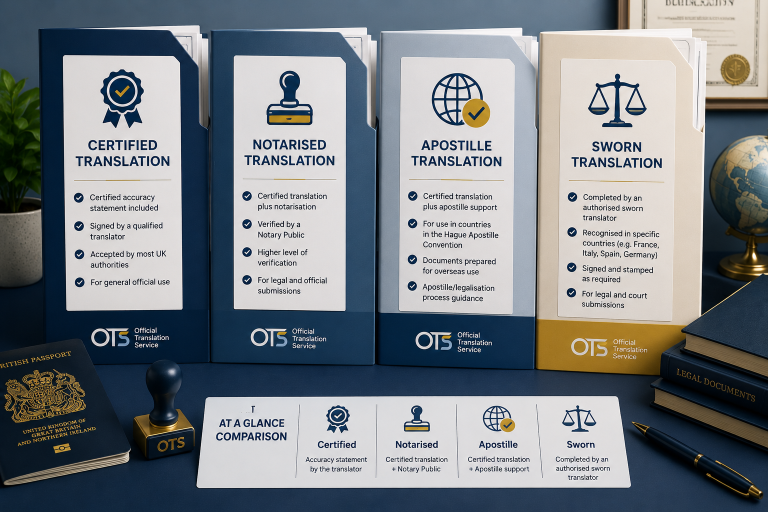
A certified translation is a translation that is accompanied by a signed statement from the translator or translation service, affirming that the translation is accurate and complete. This certification is often required for documents submitted to UK authorities. Here’s how to obtain a certified translation for UK use:
- Identify the recipient’s requirement: Determine whether the organisation receiving the document requires certification, notarisation, another formality or simply an accurate translation.
- Choose a suitable provider: Select a translator or translation service with Danish-English expertise and experience with the document type and certification route involved.
- Provide Necessary Documentation: Submit the original Danish document along with any specific instructions regarding the translation. This may include formatting requirements or particular terminologies.
- Receive the Certified Translation: Once the translation is complete, the translator will provide a signed certificate stating the accuracy of the translation. This document should include the translator’s qualifications and contact information.
- Check for Compliance: Ensure that the certified translation meets all requirements set by the UK authorities, including any specific formatting or content stipulations.
It is essential to keep in mind that not all translations need to be certified. For example, personal documents that are not submitted for official purposes may not require certification. However, when in doubt, it is always best to err on the side of caution and opt for a certified translation.
Danish Translation for UKVI: What You Need to Know
For UK immigration use, translation requirements depend on the visa route and supporting evidence being submitted. Many current routes require certified translations for relevant documents that are not in English or Welsh. Check the guidance for your specific application.
- Certification where required: For relevant non-English or non-Welsh supporting documents, provide the certified translation required by the visa-route guidance.
- Document Types: Common documents that require translation include birth certificates, marriage certificates, academic transcripts, and any legal documents related to your immigration status.
- Translation Standards: The translation must be complete, accurate, and reflect the original document’s content without omissions or alterations. Any specific terminologies used in the original document should be preserved in the translation.
- Verification details: Where required, include the accuracy confirmation, translation date, translator’s full name and signature, and contact details specified by the route guidance.
- Submission format: Follow the application instructions for uploading or providing the original and translation. Do not assume a hard copy is universally required.
Use the current guidance for the relevant visa route and make sure the translation contains the required details before submission.
Common Challenges in Danish to English Translation
Translating documents from Danish to English can present several challenges that may impact the accuracy and effectiveness of the translation. Understanding these challenges can help you better prepare for the translation process:
- Language Nuances: Danish and English have different grammatical structures, idioms, and expressions. This can lead to misunderstandings if the translator is not familiar with the cultural context of both languages.
- Cultural Considerations: Some phrases or terms may have cultural significance that does not translate directly. A skilled translator must navigate these nuances to ensure the translation conveys the intended meaning.
- Technical Jargon: Documents such as legal contracts or medical records often contain specialized terminology. Translators must have a deep understanding of these fields to ensure accuracy.
- Regional Variations: Both Danish and English have regional dialects and variations that can affect translation. For example, British English may differ significantly from American English, and Danish may have variations based on regional dialects.
To overcome these challenges, it is crucial to choose a translator who is not only fluent in both languages but also has experience in the specific field related to your documents.
Tips for Ensuring Accurate Translations
To ensure that your Danish to English translations are accurate and meet the necessary requirements, consider the following best practices:
- Prepare Your Documents: Ensure that your original documents are clear and legible. Any handwritten notes or unclear text can lead to errors in translation.
- Provide Context: When submitting documents for translation, provide any necessary context or background information that can help the translator understand the purpose and significance of the document.
- Review the Translation: After receiving the translated document, review it carefully for any errors or inconsistencies. If possible, have a third party review it as well to catch any mistakes you may have missed.
- Ask Questions: If you have any concerns or questions about the translation process, do not hesitate to ask the translator or service provider for clarification.
- Keep Copies: Always keep copies of both the original and translated documents for your records. This can be helpful for future reference or in case of any disputes.
Frequently Asked Questions
What is the process for translating Danish documents to English for UK use?
The process involves identifying the type of document needing translation, choosing a certified translation service, submitting the documents, and receiving the translated copies.
Do I need a certified translation for UKVI?
Relevant supporting documents that are not in English or Welsh often require certified translation, but the exact rule should be checked against the guidance for your visa route.
How long does it take to translate a Danish document?
Turnaround depends on document length, language direction, formatting and certification requirements.
What types of documents require translation from Danish to English?
Legal documents, academic transcripts, personal identification, and any document required for official purposes in the UK need translation.
Can I translate documents myself for official use?
For formal use, check the receiving organisation’s requirements and use an independent certified translation where that is what the recipient requires.
Danish Certified Translation for UK Documents
For Danish birth and marriage certificates, academic records, legal documents, financial papers and other official records, see our Danish certified translation service. Send a complete scan and identify the receiving organisation before you order online.