Understanding Company Registration Translation
Company registration translation refers to the process of converting documents related to the registration of a business from one language to another. This is essential for businesses that operate internationally or seek to establish themselves in foreign markets. The translation of these documents ensures that all legal requirements are met and that the information is accurately conveyed to relevant authorities.
Company registration translation can be needed when a bank, regulator, Companies House process, adviser, counterparty or overseas authority needs to understand registration documents issued in another language. The receiving organisation decides which documents and certification format it needs, so confirm those instructions before ordering.
Moreover, as businesses expand globally, they often encounter diverse legal systems and languages. For instance, a company based in Germany wishing to register in the UK must translate its incorporation documents, articles of association, and other pertinent paperwork into English. This not only facilitates the registration process but also helps in establishing credibility and trust with local stakeholders.
In summary, company registration translation is a vital aspect of international business operations, ensuring that companies can navigate the complexities of different legal environments while maintaining compliance and fostering growth.
Key Requirements for Company Registration Translation in the UK
Company-registration and corporate-document requirements vary by transaction and receiving organisation. Do not assume that every foreign company document submitted in the UK must follow one universal certified-translation format. Check the instructions for the relevant filing, bank, regulator, solicitor or other recipient.
Key documents that typically require translation include:
- Certificate of Incorporation: This document proves that a company has been legally registered. It includes essential details such as the company name, registration number, and date of incorporation.
- Articles of Association: This document outlines the rules governing the company’s operations and is crucial for understanding its structure and management.
- Business Registration Forms: These forms provide detailed information about the business, including its address, type, and ownership structure.
- Shareholder Agreements: If applicable, these agreements detail the rights and responsibilities of shareholders, which must be clearly understood by all parties involved.
In addition to these documents, any supporting materials that provide context or additional information about the business may also need to be translated. It is essential to ensure that the translations are accurate and reflect the original documents’ intent and meaning.
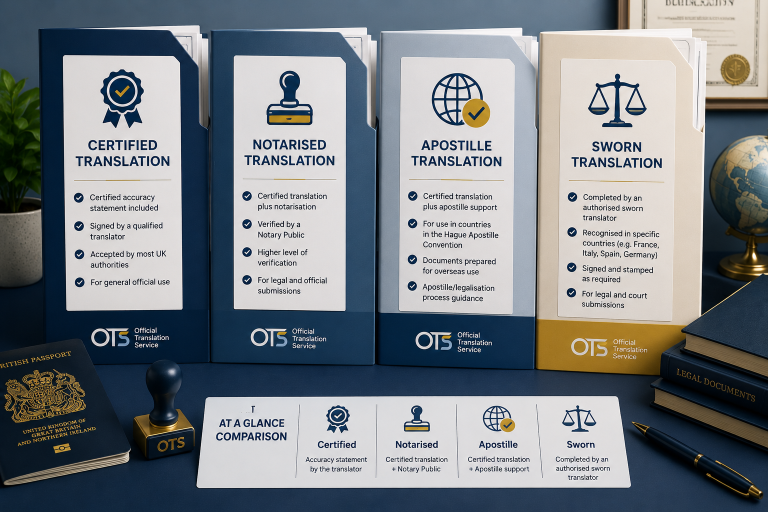
Where the recipient asks for certification, the translation can be supplied with an accuracy statement and identifying details for the translation provider. Certification supports verification of the translation; it does not by itself make the underlying corporate document legally valid or guarantee acceptance.
The Process of Getting Company Registration Translated
The process of obtaining a company registration translation involves several key steps to ensure accuracy and compliance with legal requirements. Here is a step-by-step guide:
- Identify Required Documents: Begin by determining which documents need translation. This typically includes the certificate of incorporation, articles of association, and any other relevant paperwork.
- Choose an appropriate provider: Use a service experienced with corporate and legal terminology and able to meet any certification requirements stated by the receiving organisation.
- Submit Your Documents: Provide the translator with the original documents and any specific instructions regarding the translation. Clear communication about your needs will help ensure the final product meets your expectations.
- Review the Translation: Once the translation is completed, review it for accuracy and completeness. It may be beneficial to have a bilingual individual check the translation to ensure it conveys the intended meaning.
- Obtain Certification: Request a certification statement from the translator, confirming the accuracy of the translation. This statement is often required for official submissions.
- Submit Translated Documents: Finally, submit the certified translations along with any other required documents to the relevant UK authorities for company registration.
Choosing a certified translator is a critical step in this process. A certified translator not only ensures the accuracy of the translation but also provides the necessary certification that validates the documents for legal purposes. Look for translators with experience in legal and business contexts, as they will be familiar with the specific terminology and requirements involved in company registration.
Types of Documents Commonly Translated
In the context of company registration, several key documents are commonly translated. Understanding these documents and their importance can help streamline the registration process:
- Certificate of Incorporation Translation: This document serves as proof that a company has been officially registered. It typically includes the company name, registration number, and the date of incorporation. Accurate translation of this document is vital, as it is often the first document reviewed by authorities.
- Business Registration Translation: This includes various forms and applications submitted to register a business. These documents provide essential information about the business structure, ownership, and operational details. Ensuring these documents are accurately translated is crucial for compliance with local laws.
- Financial Statements: If required, financial statements may also need translation. These documents provide insights into the company’s financial health and are often scrutinized by investors and regulatory bodies.
- Tax Registration Documents: Any documents related to tax registration must be translated to ensure compliance with local tax laws.
Each of these documents plays a crucial role in establishing a business’s legal standing in the UK. Therefore, ensuring their accurate translation is essential for a smooth registration process.
Certified Translation Process for Company Registration
A certified translation is a translation that comes with a signed statement from the translator or translation service provider, attesting to the accuracy and completeness of the translation. This certification is crucial for legal and official purposes, particularly when dealing with company registration in the UK.
The certified translation process typically involves the following steps:
- Selection of a Qualified Translator: Choose a translator or translation service that specializes in certified translations. Look for credentials and experience in legal translations.
- Document Submission: Provide the translator with the original documents that require translation. Ensure that the documents are clear and legible to facilitate an accurate translation.
- Translation and Review: The translator will convert the documents into the target language, ensuring that all legal terminology is accurately represented. After the translation is complete, it should be reviewed for accuracy.
- Certification: Once the translation is verified, the translator will provide a certification statement. This statement should include the translator’s qualifications, the date of the translation, and an affirmation of the translation’s accuracy.
- Delivery of Translated Documents: The certified translation, along with the certification statement, will be delivered to you. Ensure that you keep copies for your records and submit the originals to the relevant authorities.
Ensuring that your translation is certified is essential for legal compliance. Many government agencies and financial institutions require certified translations for official documents, making this a crucial step in the company registration process.
Common Challenges in Company Registration Translation
Company registration translation can present several challenges that businesses must navigate to ensure compliance and accuracy. Understanding these challenges can help mitigate risks:
- Language Barriers: Different languages have unique structures, idioms, and terminologies. A direct translation may not always convey the intended meaning, leading to potential misunderstandings. It is vital to work with translators who are not only fluent in both languages but also familiar with the legal terminology used in business contexts.
- Legal Terminology: The legal language used in company registration documents can be complex and specific. Translators must have a strong grasp of legal concepts in both the source and target languages to ensure accurate translations. Misinterpretation of legal terms can lead to significant issues during the registration process.
- Ensuring Accuracy and Compliance: It is crucial to ensure that all translated documents accurately reflect the original content. Small errors or omissions can result in delays, rejections, or even legal complications. Implementing a thorough review process can help identify and rectify any issues before submission.
By being aware of these challenges, businesses can take proactive steps to ensure that their company registration translations are accurate and compliant with UK regulations. This may include working closely with experienced translators and implementing a robust review process to catch any potential errors.
Cost Factors for Company Registration Translation
The cost of company registration translation can vary significantly based on several factors. Understanding these factors can help businesses budget effectively for translation services:
- Document Length: The length of the documents to be translated is a primary cost factor. Longer documents will naturally incur higher translation fees due to the increased time and effort required.
- Complexity of Content: Documents with complex legal terminology or specialized content may require more expertise and time to translate accurately, impacting the overall cost.
- Language Pair: The language pair involved in the translation can also affect costs. Languages that are less commonly spoken may incur higher fees due to a smaller pool of qualified translators.
- Turnaround Time: If a quick turnaround is required, translation services may charge a premium for expedited services. Businesses should plan ahead to avoid additional costs associated with rush orders.
- Certification Requirements: If certified translations are required, there may be additional fees associated with the certification process. It is essential to clarify these costs upfront with the translation service provider.
By understanding these cost factors, businesses can better prepare their budgets and choose translation services that align with their financial constraints while ensuring quality and compliance.
Choosing the Right Translation Service Provider
Selecting the right translation service provider is crucial for ensuring accurate and compliant company registration translations. Here are key considerations to keep in mind:
- Expertise in Legal Translations: Look for a provider that specializes in legal and business translations. They should have a thorough understanding of the terminology and requirements involved in company registration.
- Recipient requirements: Confirm that the provider can supply the certification, formatting and verification details requested for the filing or transaction.
- Client Testimonials: Review testimonials and case studies from previous clients to gauge the provider’s reputation and the quality of their work. Positive feedback from businesses in similar industries can indicate a strong track record.
- Clear Communication: Choose a provider that communicates clearly and promptly. Effective communication is essential for understanding your specific needs and ensuring that the final translation meets your expectations.
- Cost Transparency: Look for a provider that offers transparent pricing with no hidden fees. Request detailed quotes that outline the costs associated with translation and certification.
By considering these factors, businesses can select a translation service provider that meets their needs and ensures a smooth company registration process in the UK.
Preparing Company Registration Documents for Translation
Send the complete current corporate documents, identify the country and organisation receiving them, and include any filing, bank, regulator or legal instructions. This makes it possible to confirm whether certification, notarisation or another formality is actually required before translation begins.
Conclusion and Next Steps
In conclusion, company registration translation is a critical component for businesses looking to establish themselves in the UK or operate internationally. Accurate translations of key documents ensure compliance with legal requirements and facilitate a smooth registration process. Understanding the requirements, challenges, and costs associated with translation can help businesses make informed decisions.
As you prepare for your company registration, consider engaging a certified translation service that specializes in legal translations. This will not only save you time and potential headaches but also ensure that your documents are accurately translated and certified for submission to the relevant authorities.
For company incorporation, registration and corporate records, review our company registration translation service and business translation services, or send the documents for review.
Frequently Asked Questions
What is company registration translation?
It is the translation of documents related to business registration for legal purposes.
What documents need to be translated for company registration?
Certificate of incorporation, business registration forms, and other legal documents.
How can I get my company registration translated?
Contact a certified translation service provider and submit your documents.
What is a certified translation?
A certified translation is a translation that comes with a signed statement attesting to its accuracy.
How much does company registration translation cost?
Costs vary based on document length, complexity, and service provider rates.
Why is accuracy important in company registration translation?
Accuracy ensures compliance with legal requirements and prevents issues in business operations.