Certified Translation in Oxford for Official and Academic Documents
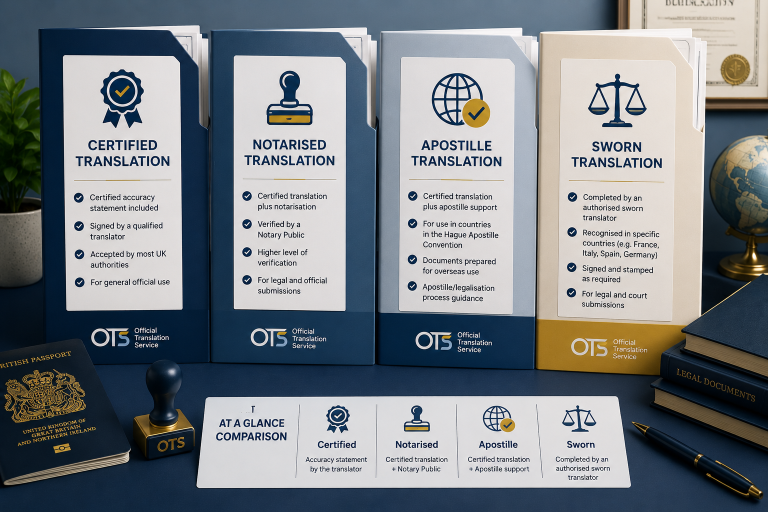
Certified translation refers to the process of translating documents in a manner that meets specific legal and official standards. A certified translation is accompanied by a signed statement from the translator, attesting to the accuracy and completeness of the translation. This certification is crucial for various documents, including legal contracts, academic transcripts, and immigration papers, where precision and authenticity are paramount.
Translation of University of Oxford Certificates and Academic Records
If you have a certificate, degree document, transcript or other academic record issued by the University of Oxford and need to submit it to an organisation that requires another language, the receiving organisation may ask for a certified translation. Confirm the required language, certification wording and whether the complete certificate or transcript must be translated before ordering.
This is an independent translation service and is not affiliated with or endorsed by the University of Oxford. For document-specific support, see our degree certificate translation service, or use our certified translation Oxford page for the commercial service.
Moreover, certified translations are not merely about the words on the page; they also encompass the cultural nuances and legal terminologies specific to the source and target languages. This level of detail ensures that the translated document holds the same weight and meaning as the original, which is crucial in legal contexts where misinterpretations can lead to significant consequences.
Why You Need Certified Translation in Oxford
There are numerous scenarios in which certified translation is necessary, particularly in a multicultural city like Oxford. One common situation arises when individuals are applying for visas or residency permits. Immigration authorities often require certified translations of personal documents, such as birth certificates, marriage licenses, and police clearance certificates, to ensure they are valid and accurately represent the original documents.
Academic applications can involve certificates, transcripts, references and other records from institutions in the UK or overseas. Whether a certified translation is required depends on the receiving university, employer, professional body or other organisation, so applicants should follow the recipient’s published document requirements.
For legal or official use, the correct translation format depends on the receiving organisation. A translation that lacks required certification details can be returned or rejected, so the safest approach is to confirm the recipient’s instructions before work begins.
When choosing a translation service provider, consider the following criteria:
- Expertise: Ensure the agency has experience in the specific type of translation you require, whether legal, medical, or academic.
- Certification format: Ask what certification statement and identifying details will be supplied and whether they match the receiving organisation’s requirements.
- Client Reviews: Check online reviews and testimonials to gauge the quality of service and customer satisfaction.
- Turnaround Time: Consider how quickly you need the translation completed and whether the agency can meet your deadlines.
Customer reviews often highlight the importance of communication and reliability in the translation process. Many clients emphasize the need for agencies that not only provide accurate translations but also maintain open lines of communication throughout the project. This feedback is crucial for ensuring that clients feel supported and informed during the translation process.
How to Choose a Certified Translator in Oxford
Selecting a translation provider for an Oxford submission involves matching the language pair, document type and certification requirements to the intended use. Ask whether the provider has experience with academic, legal, immigration or other documents similar to yours and how the finished translation will be certified.
Additionally, consider the following questions when interviewing potential translators:
- What is your experience with this type of document? Understanding their familiarity with the specific terminology and nuances of your document type is crucial.
- Can you provide references or testimonials? Previous client feedback can offer insights into the translator’s reliability and quality of work.
- What is your turnaround time? Ensure that the translator can meet your deadlines without compromising quality.
- What is your pricing structure? Understanding the costs upfront can help you avoid unexpected fees later in the process.
By asking these questions, you can gauge the translator’s suitability for your needs and ensure that you are making an informed decision.
Costs of Certified Translation in Oxford
The cost of certified translation in Oxford depends on the document, language pair, amount of text, formatting, certification route and deadline. Send the actual file for review so the quote reflects the real scope of work.
Factors influencing pricing include:
- Document Type: Legal documents often require more specialized knowledge and may cost more than standard translations.
- Length and Complexity: Longer documents or those with complex terminology may incur higher fees due to the additional time and expertise required.
- Urgency: If you need a rush service, expect to pay a premium for expedited translations.
It is advisable to obtain quotes from multiple translation services to compare prices and services. Most reputable agencies will provide a free quote based on the specifics of your project, allowing you to make an informed choice.
The Process of Certified Translation
The process of obtaining a certified translation typically involves several key steps:
- Initial Consultation: Discuss your needs with the translation service, providing details about the document, language pair, and any specific requirements.
- Quote and Agreement: After assessing your document, the agency will provide a quote. Once you agree to the terms, they will proceed with the translation.
- Translation: A certified translator will work on your document, ensuring that all content is accurately translated and culturally relevant.
- Review and Certification: After the translation is complete, it will be reviewed for accuracy before being certified with the translator’s signature and stamp.
- Delivery: The final certified translation will be delivered to you, either electronically or in hard copy, depending on your preference.
Throughout this process, you can expect clear communication from the translation service, ensuring that you are kept informed at every stage. This transparency is vital for building trust and ensuring satisfaction with the final product.
Frequently Asked Questions about Certified Translation
What is certified translation?
A certified translation is a translation accompanied by a signed statement from the translator attesting to its accuracy.
How do I find certified translation services in Oxford?
Search online for local services, check reviews, and ask for recommendations.
What documents typically require certified translation?
Legal documents, academic transcripts, immigration papers, and medical records.
How much does certified translation cost in Oxford?
Costs vary by document, language pair, length, formatting, certification and deadline. The most reliable price is confirmed after the source file has been reviewed.
Can I get a certified translation for any language?
Availability depends on the language pair and document requirements. Confirm the language direction and intended use when requesting the translation.